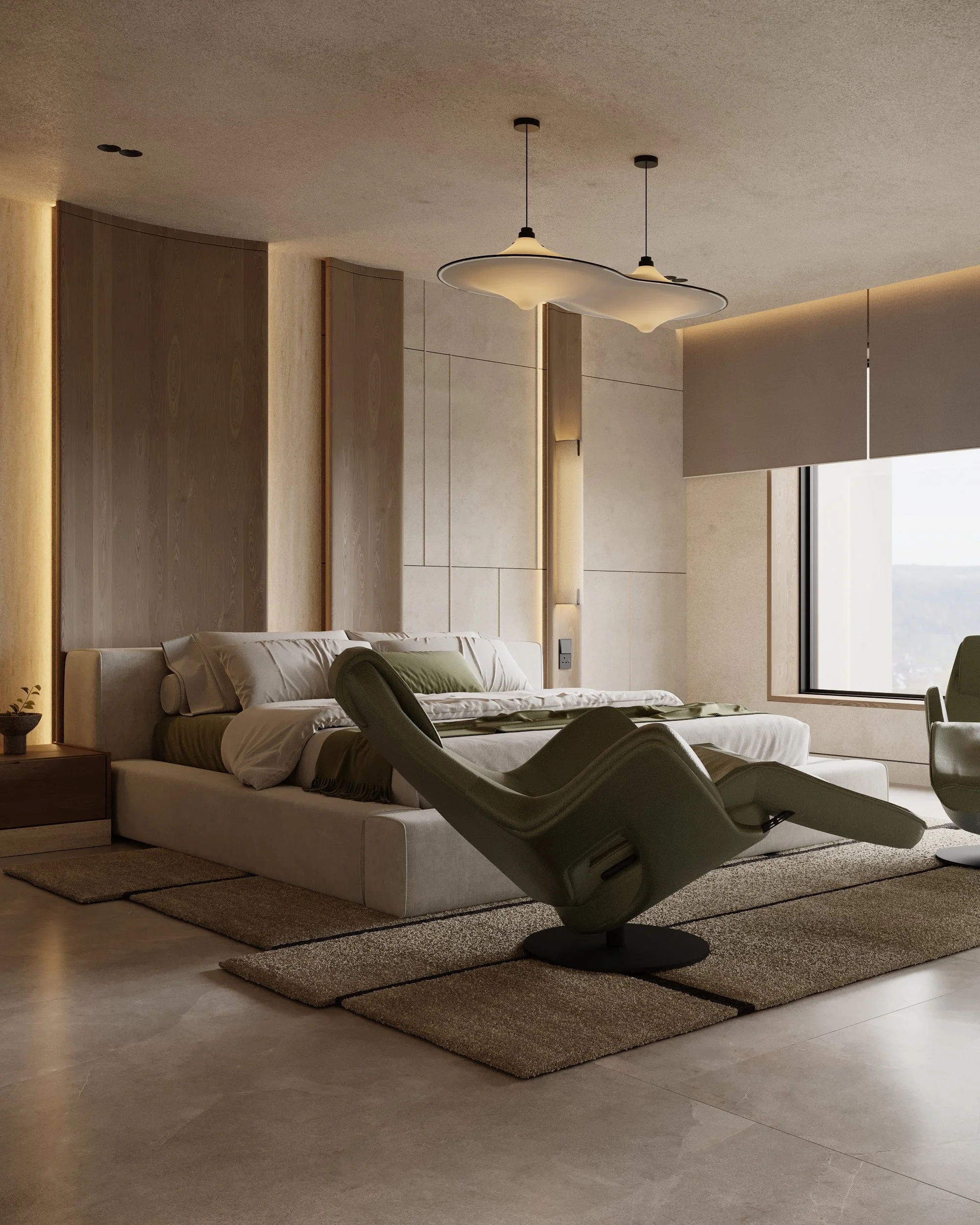
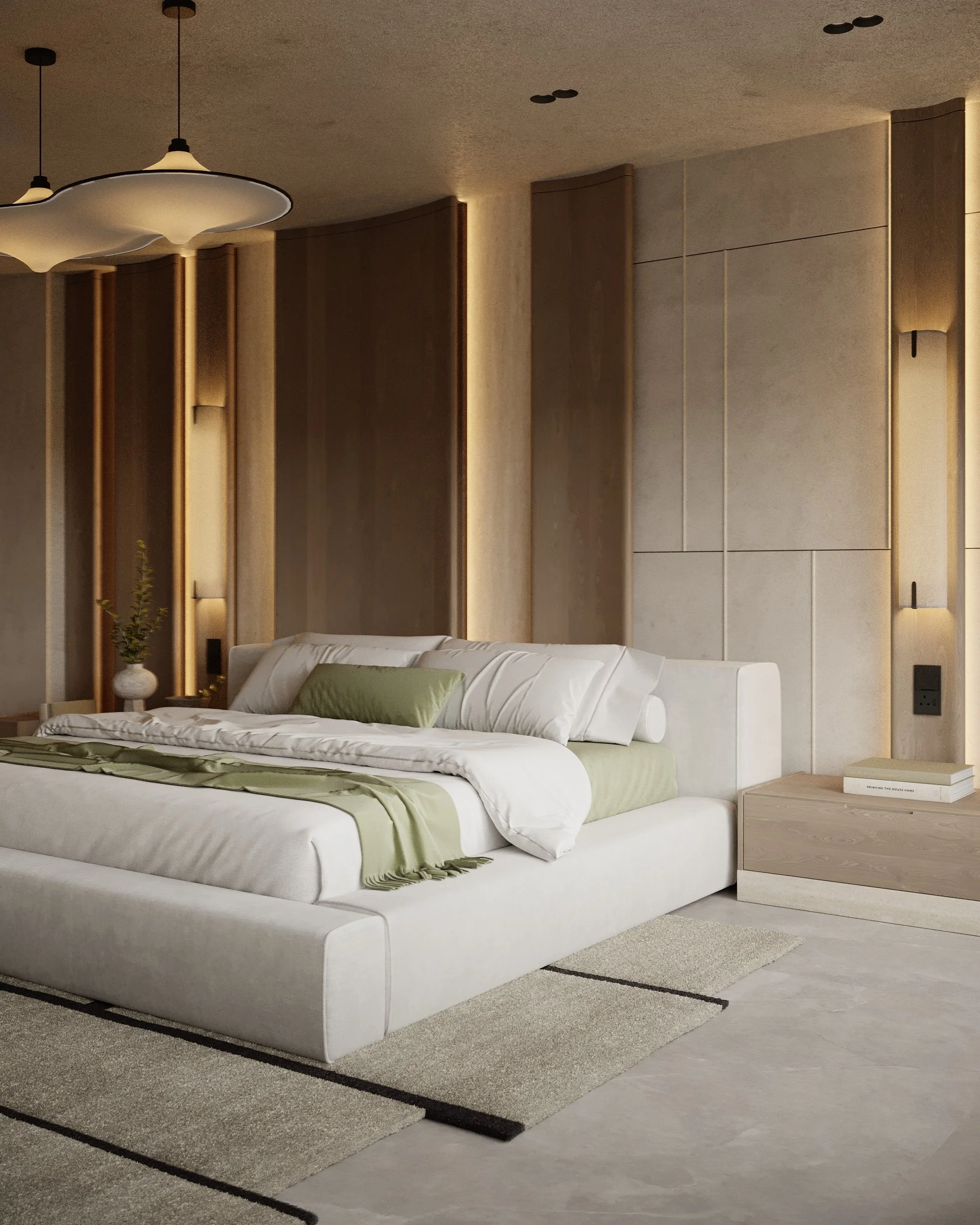
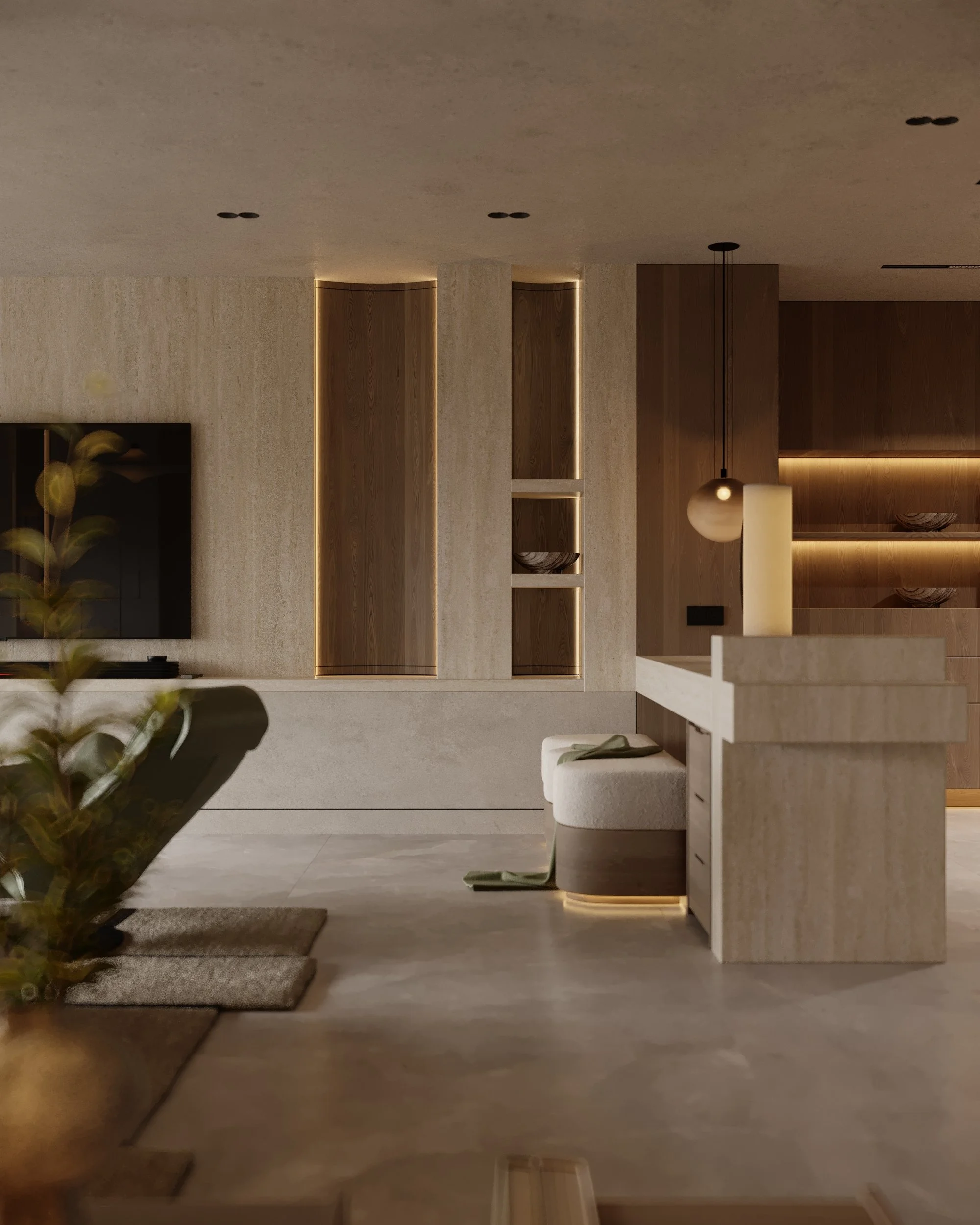
The design of this residential project was driven by flexibility and spatial openness, responding both to the client’s current lifestyle and to potential future needs of the home.
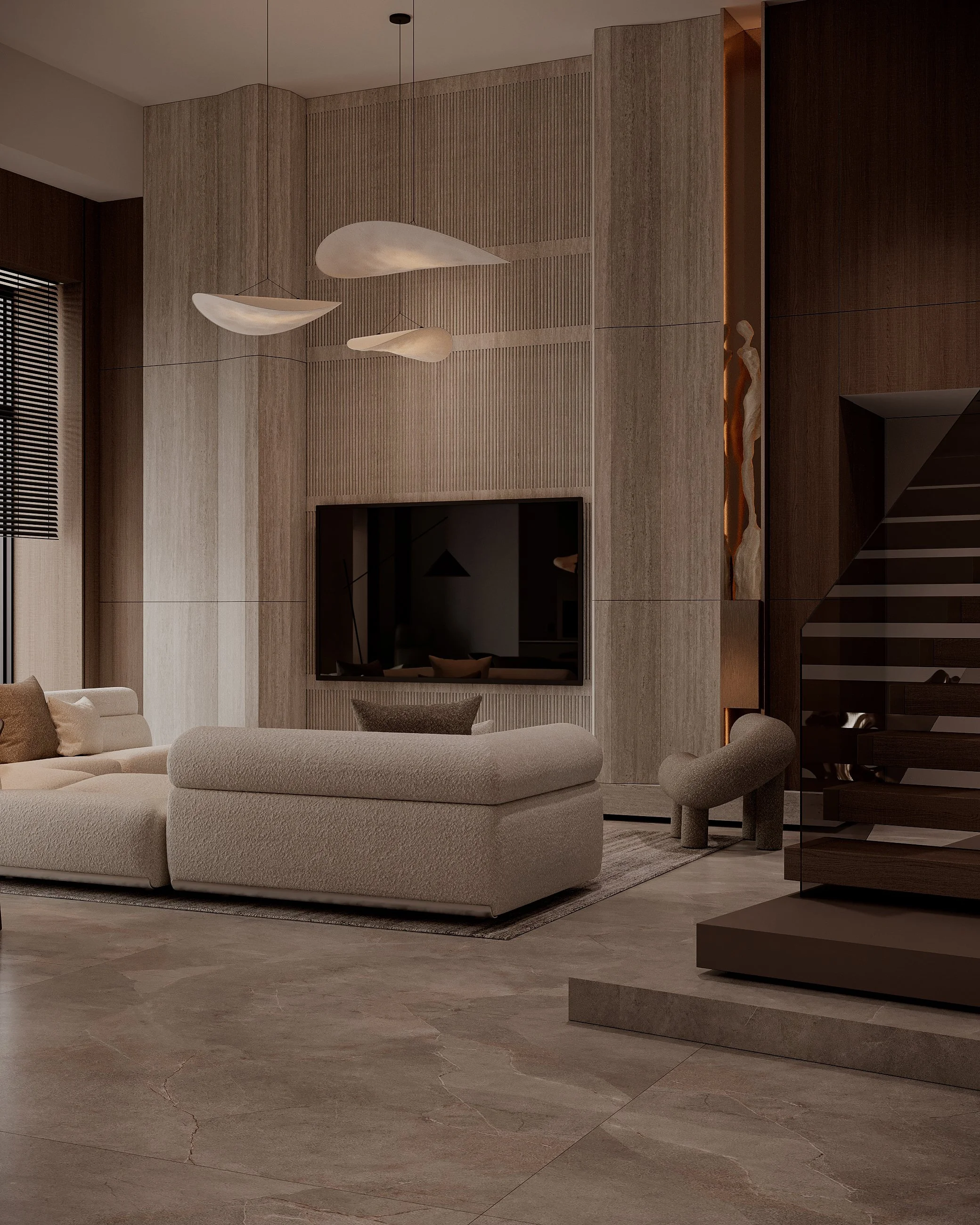
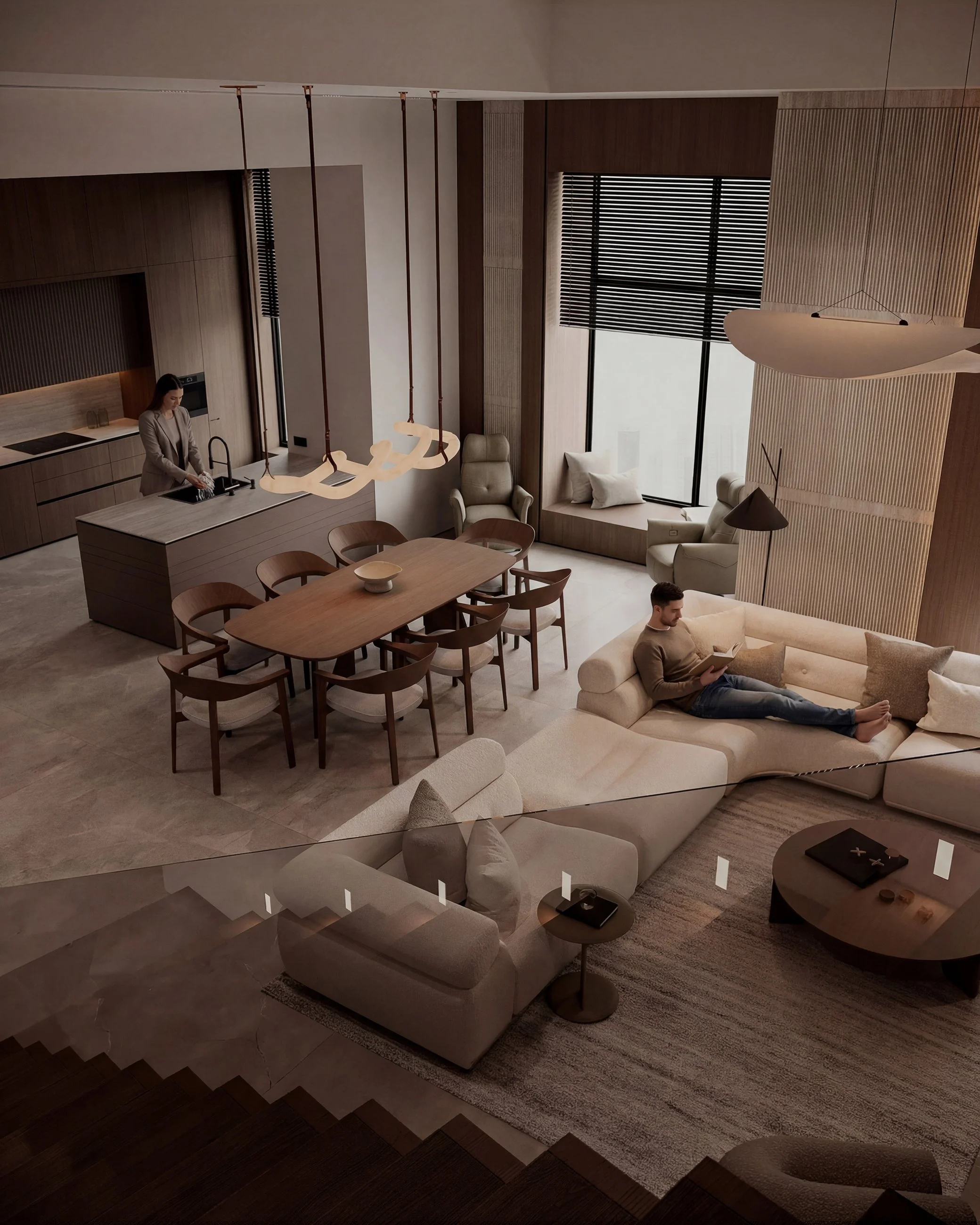
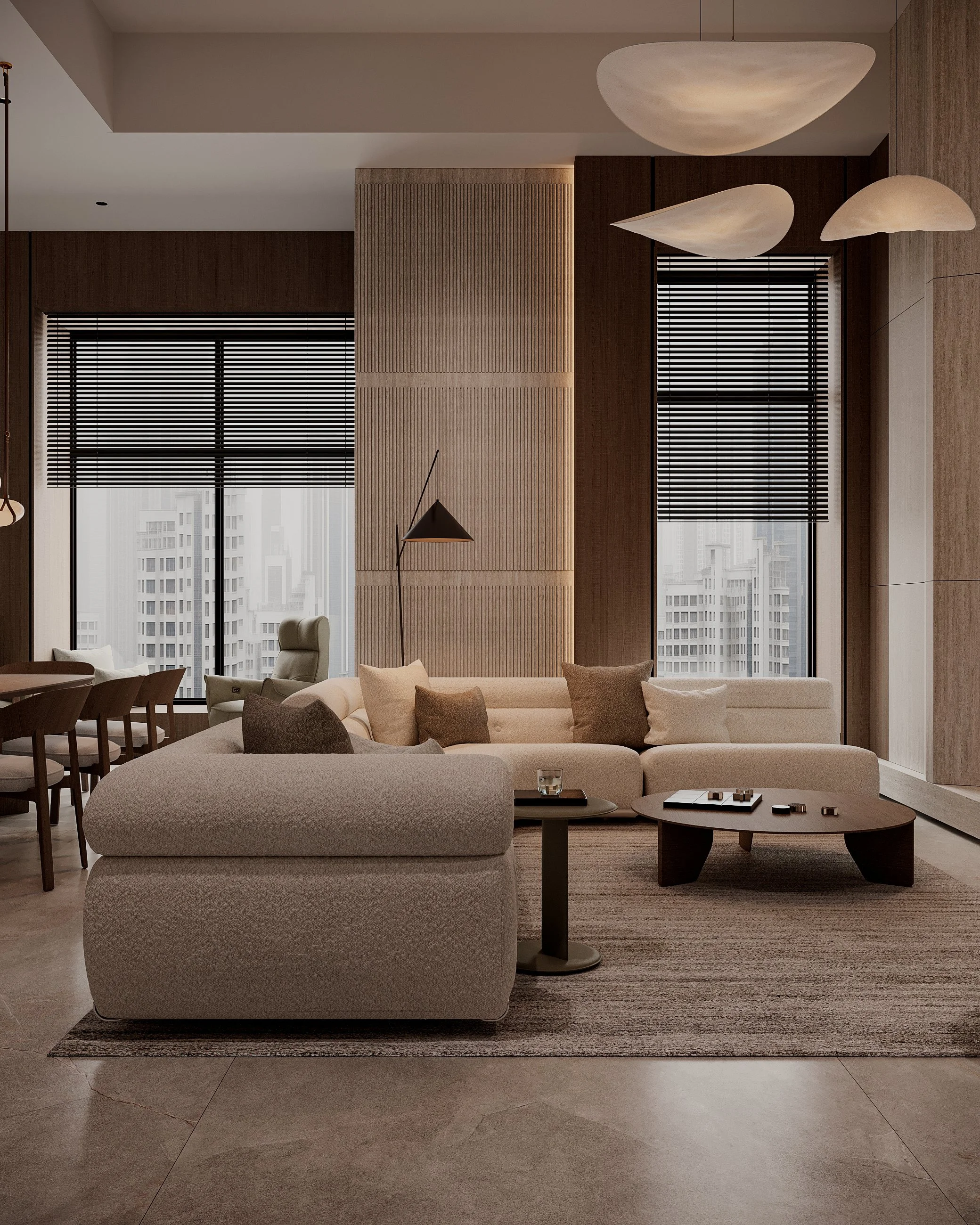
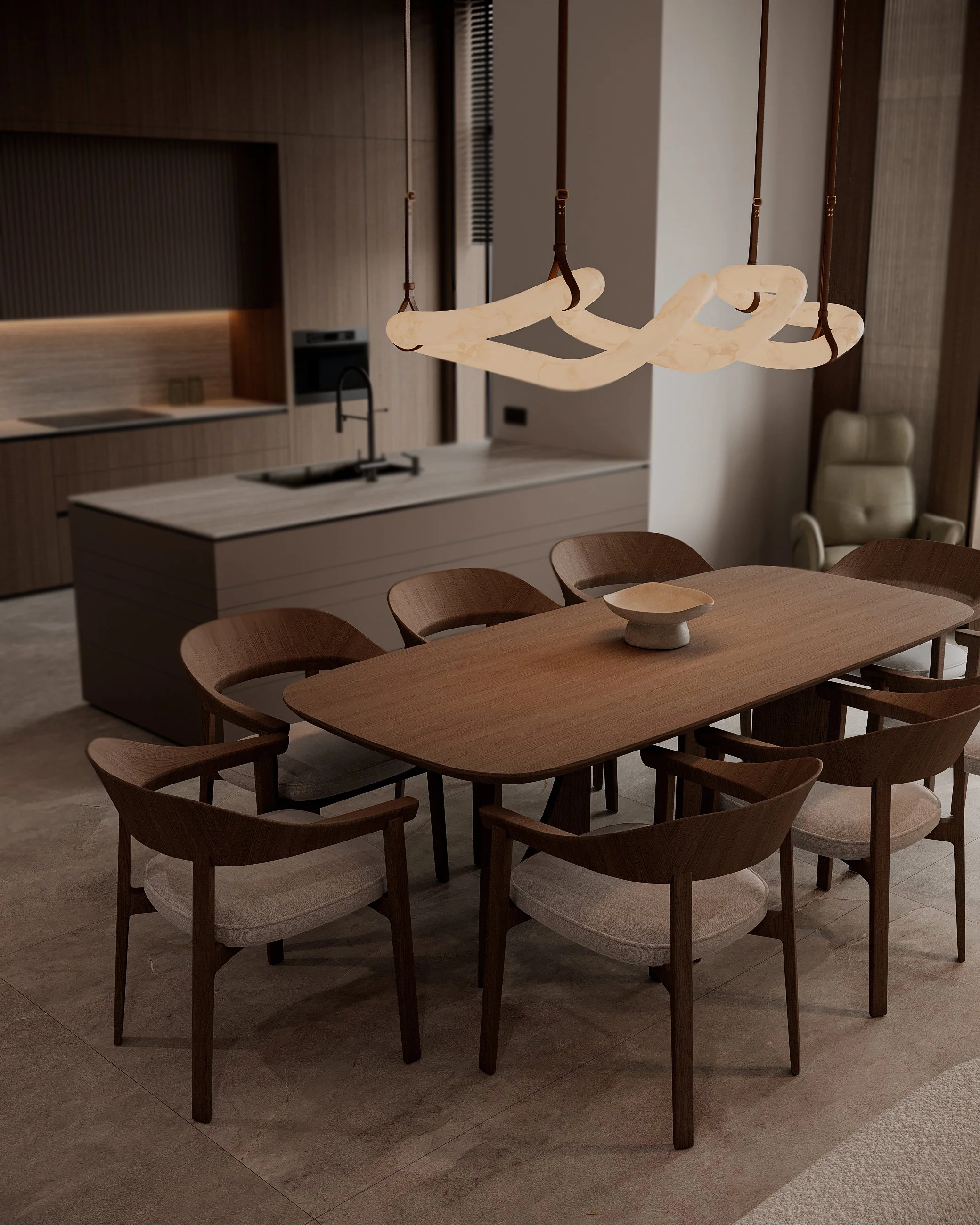
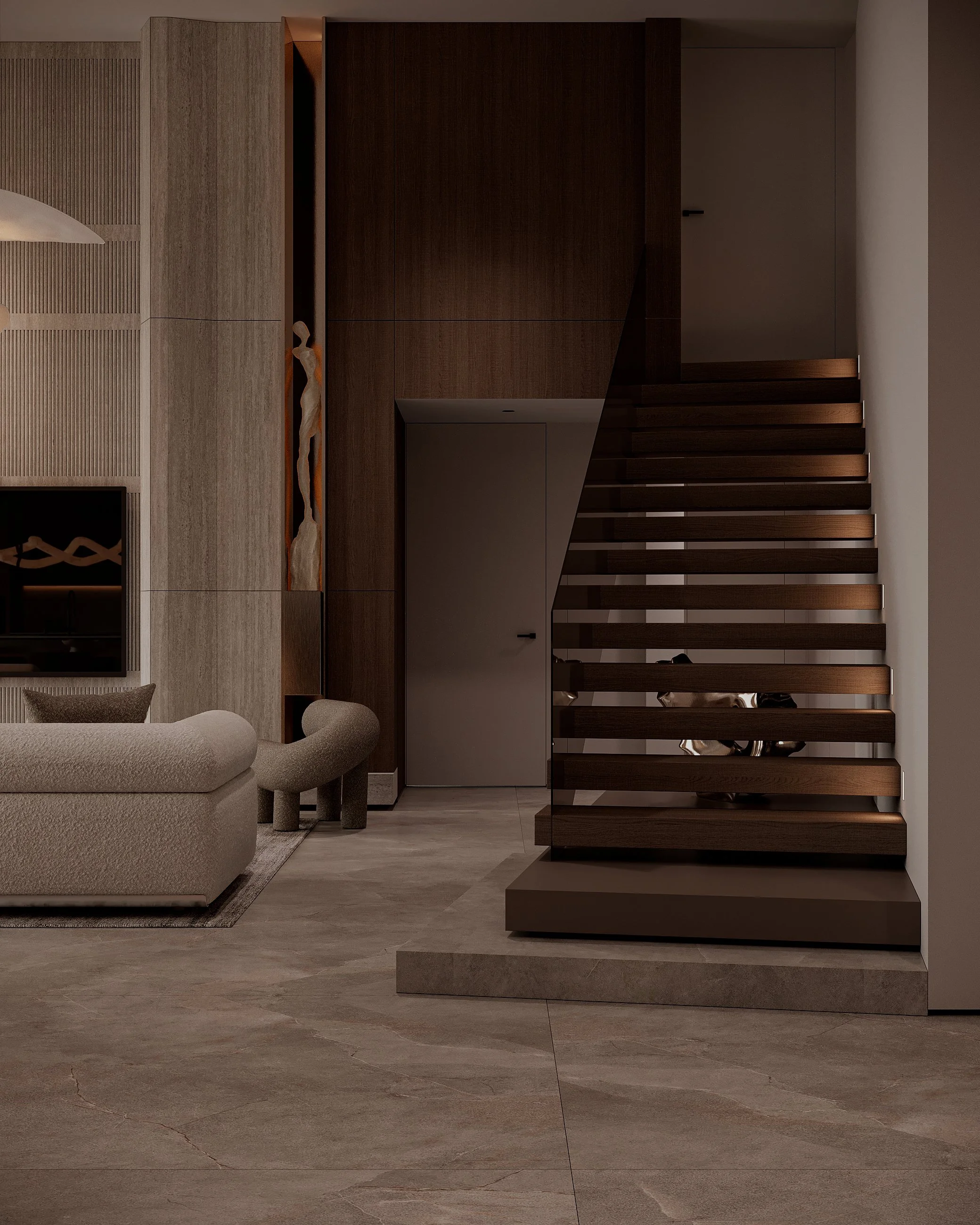
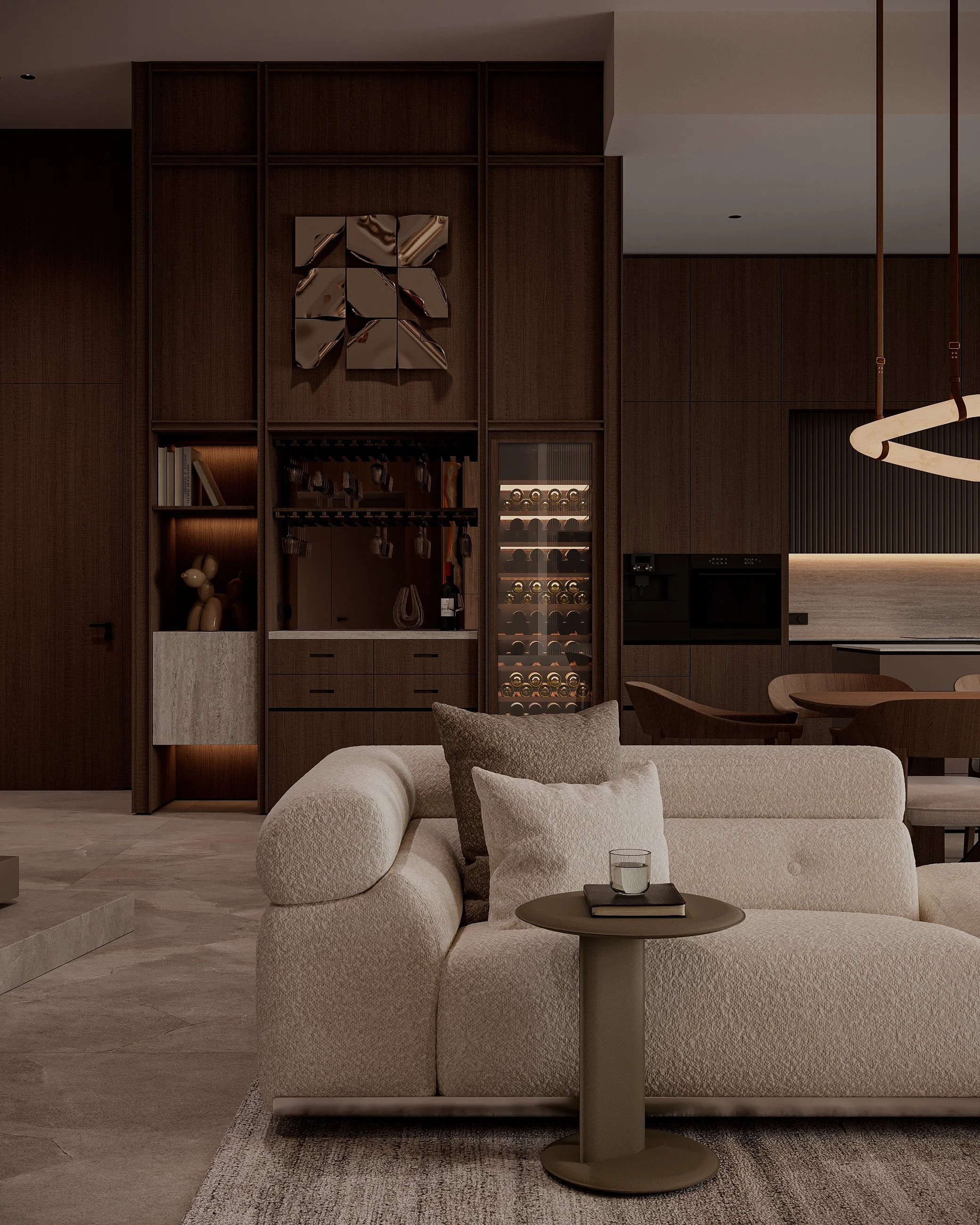
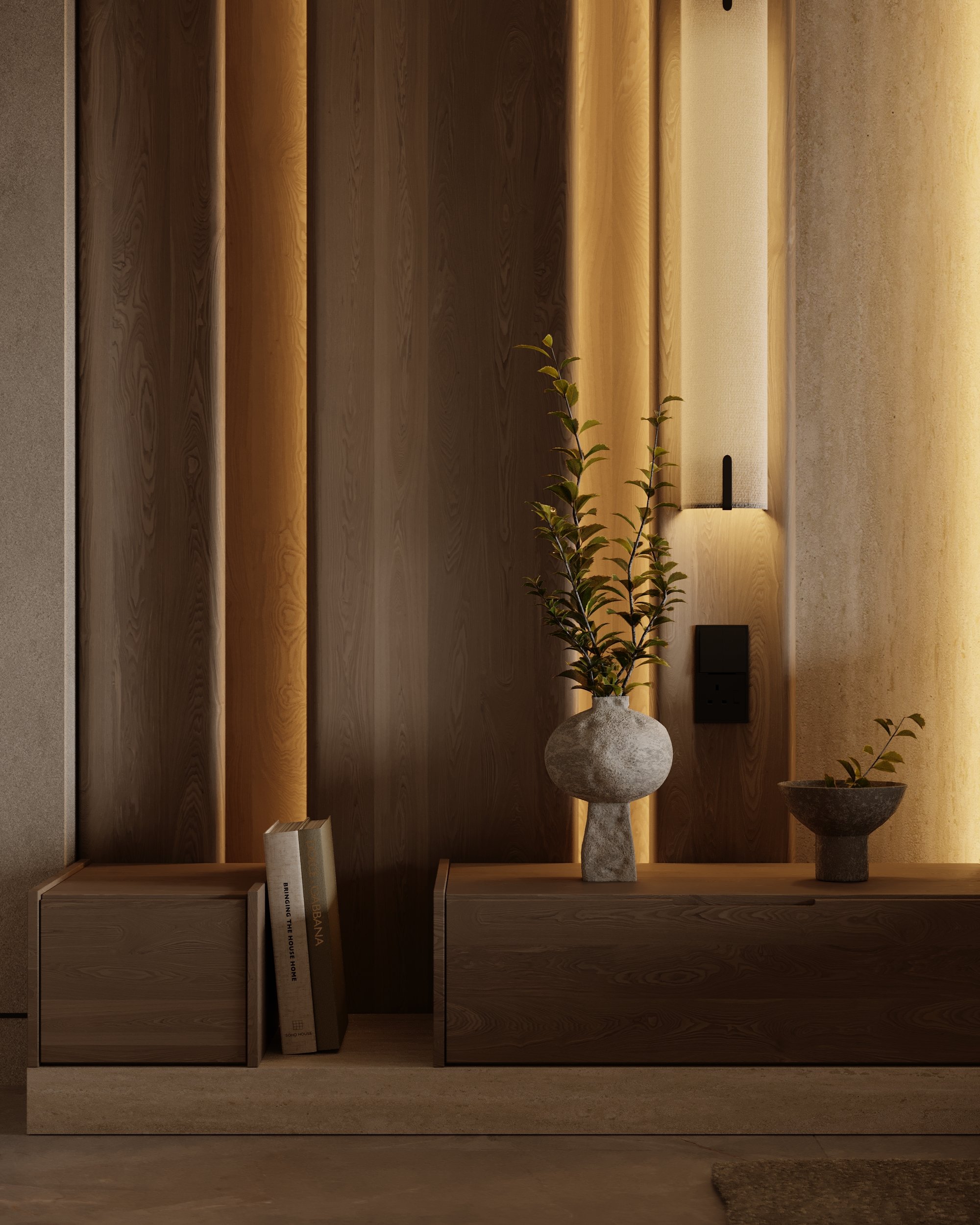
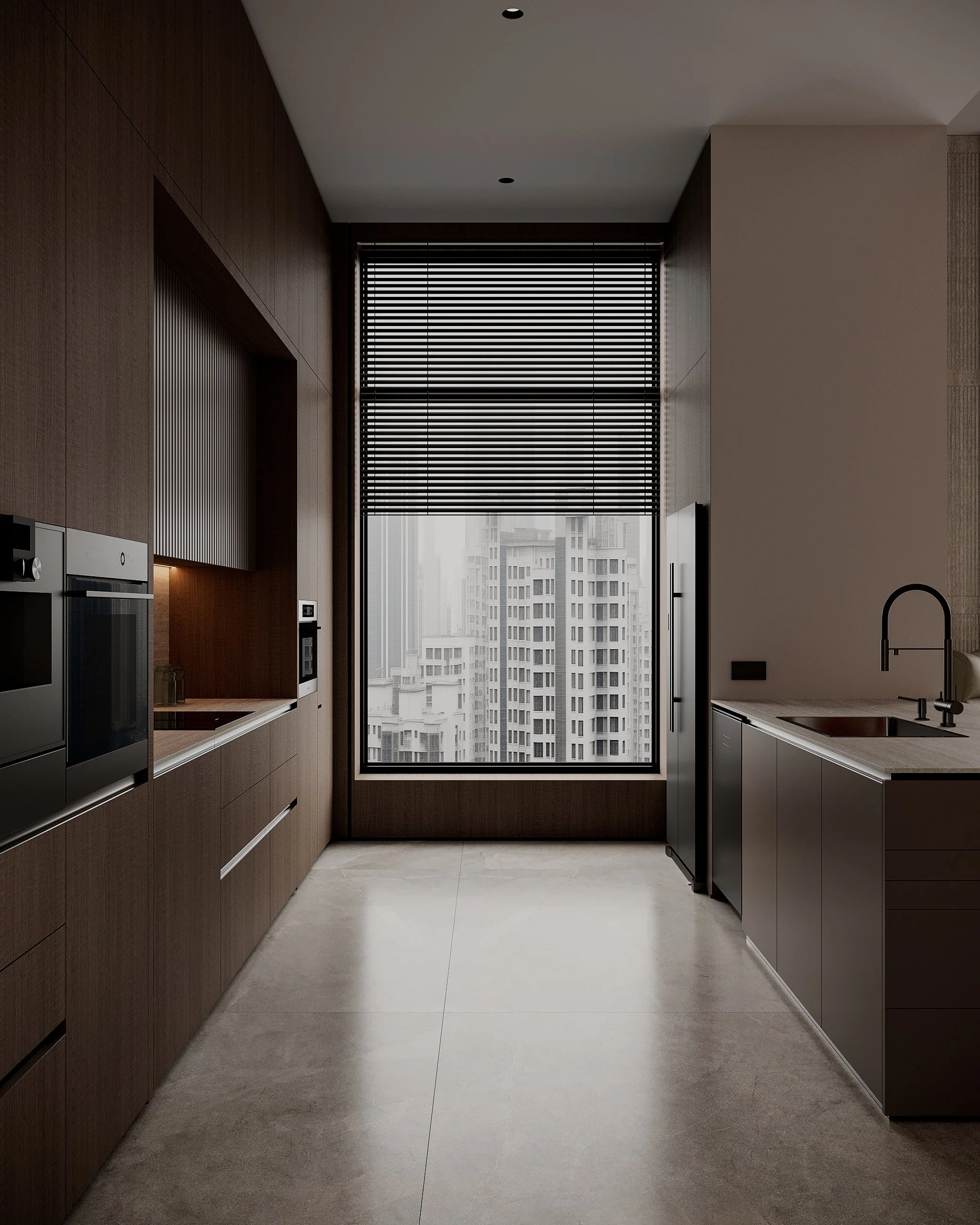
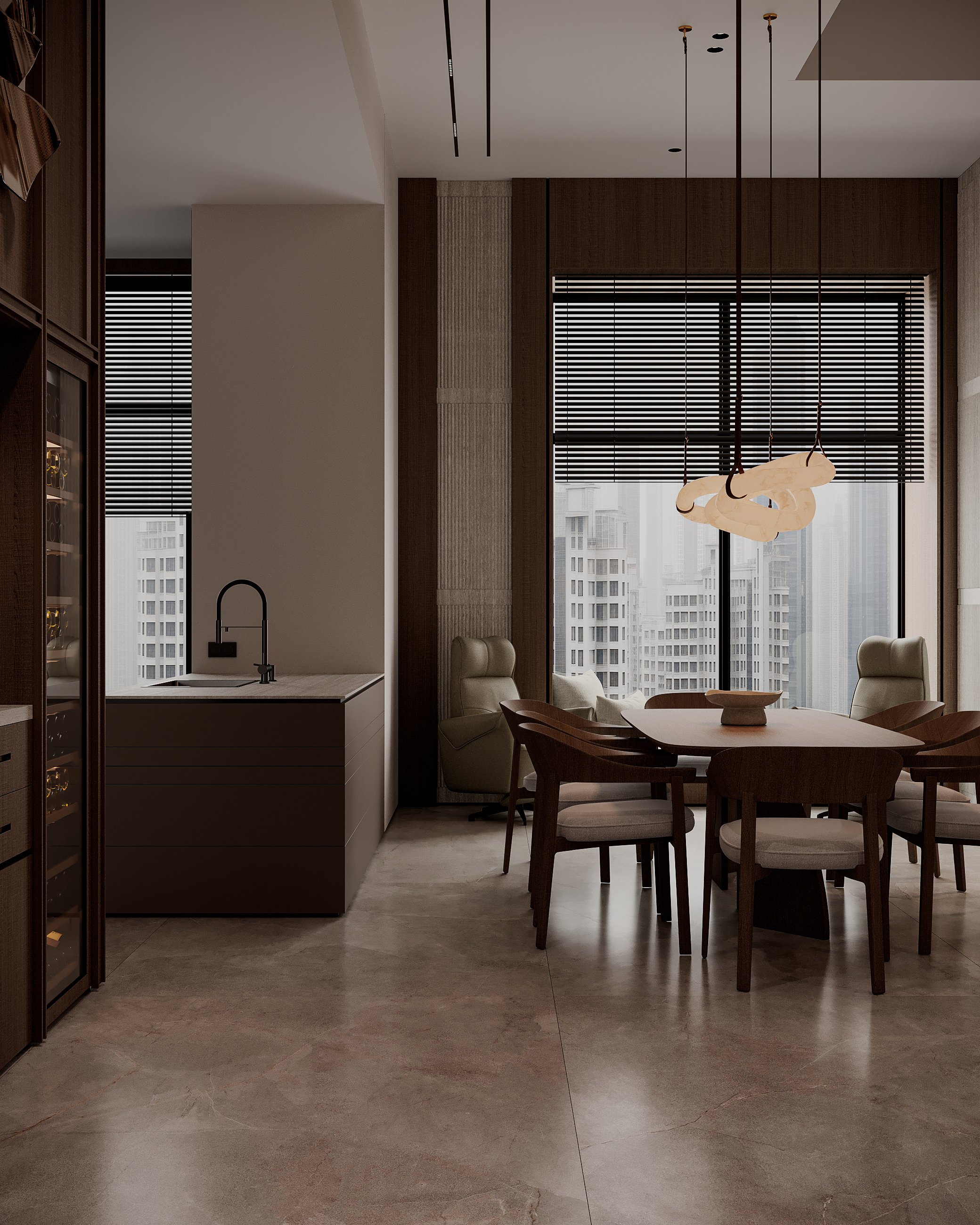
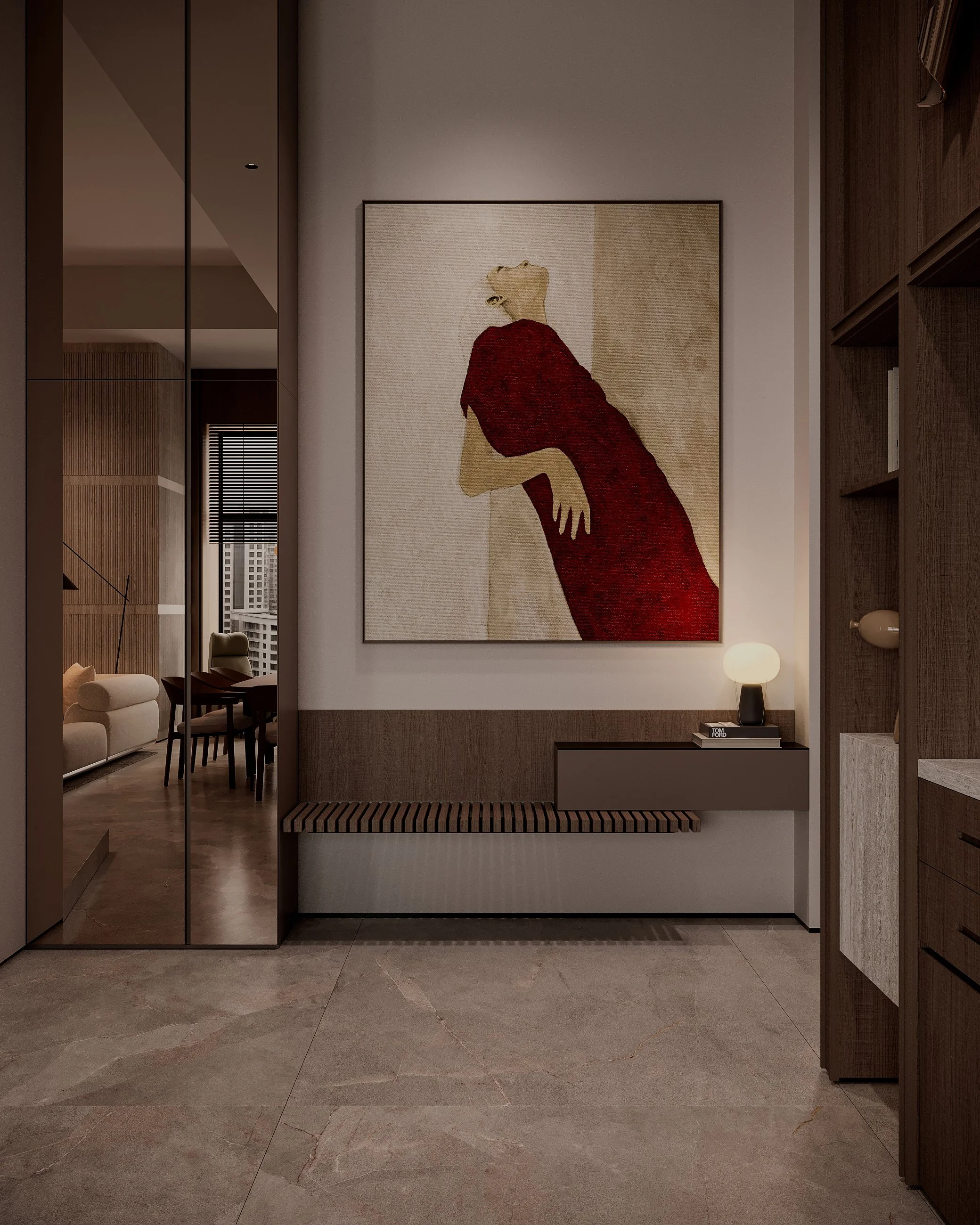
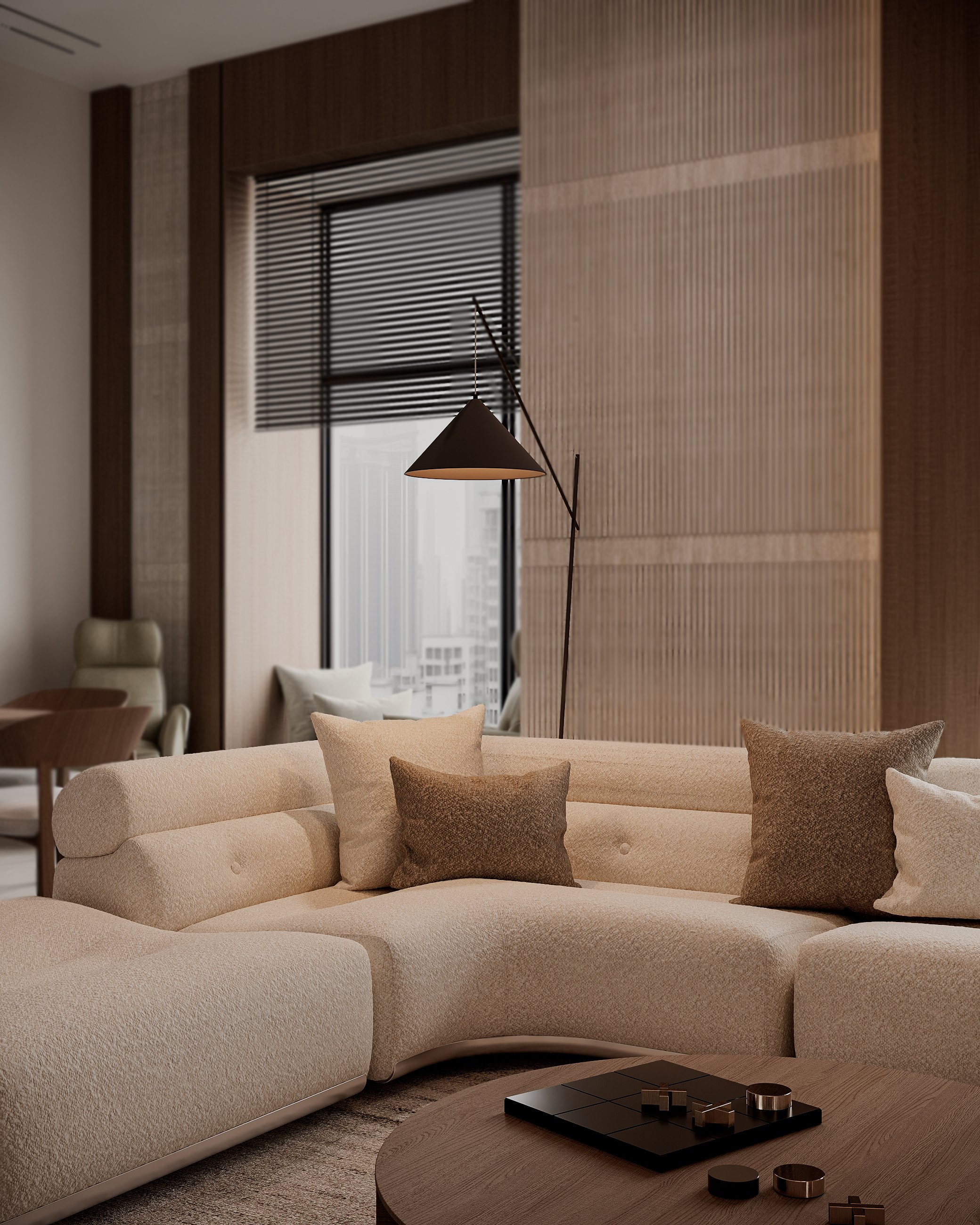
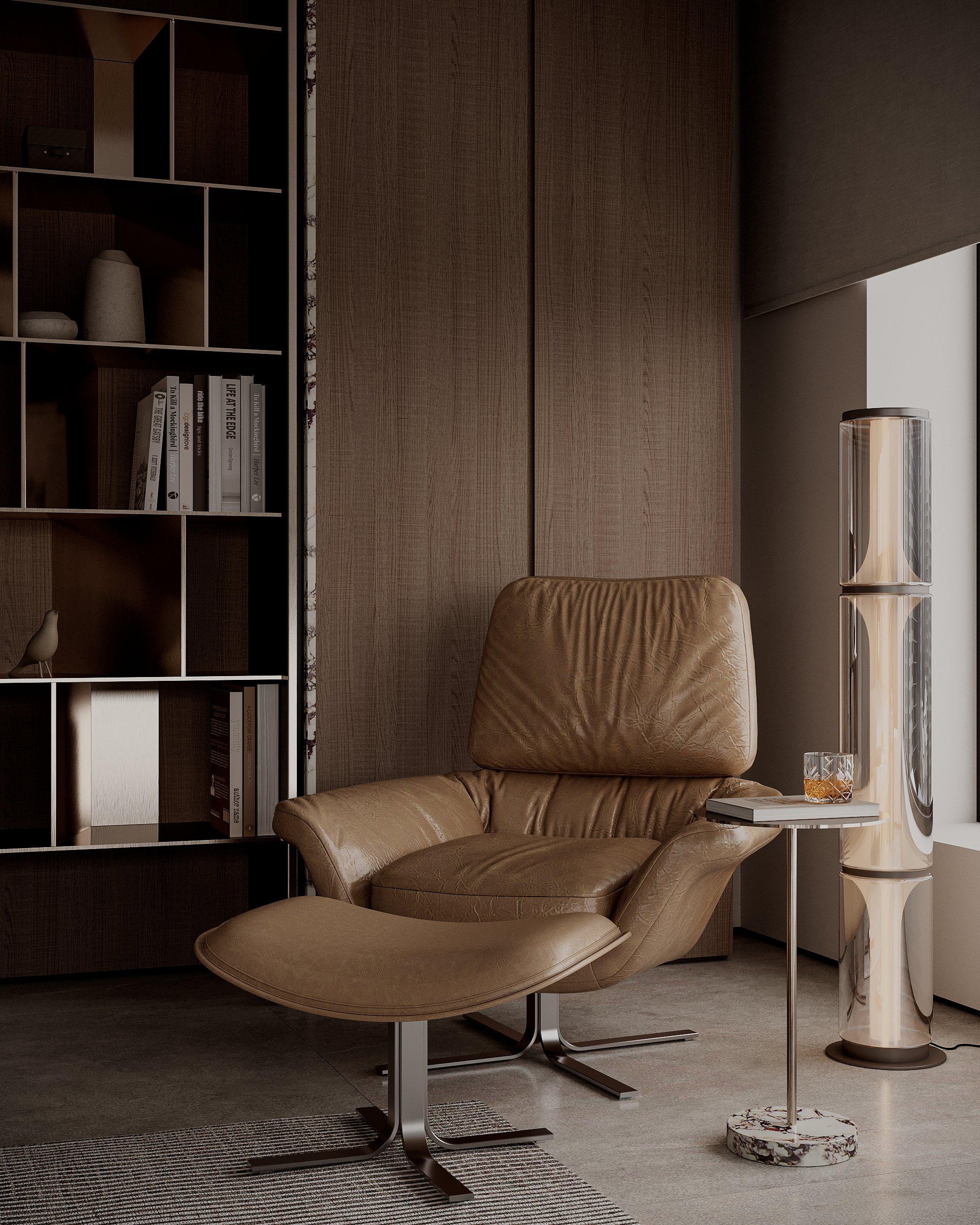
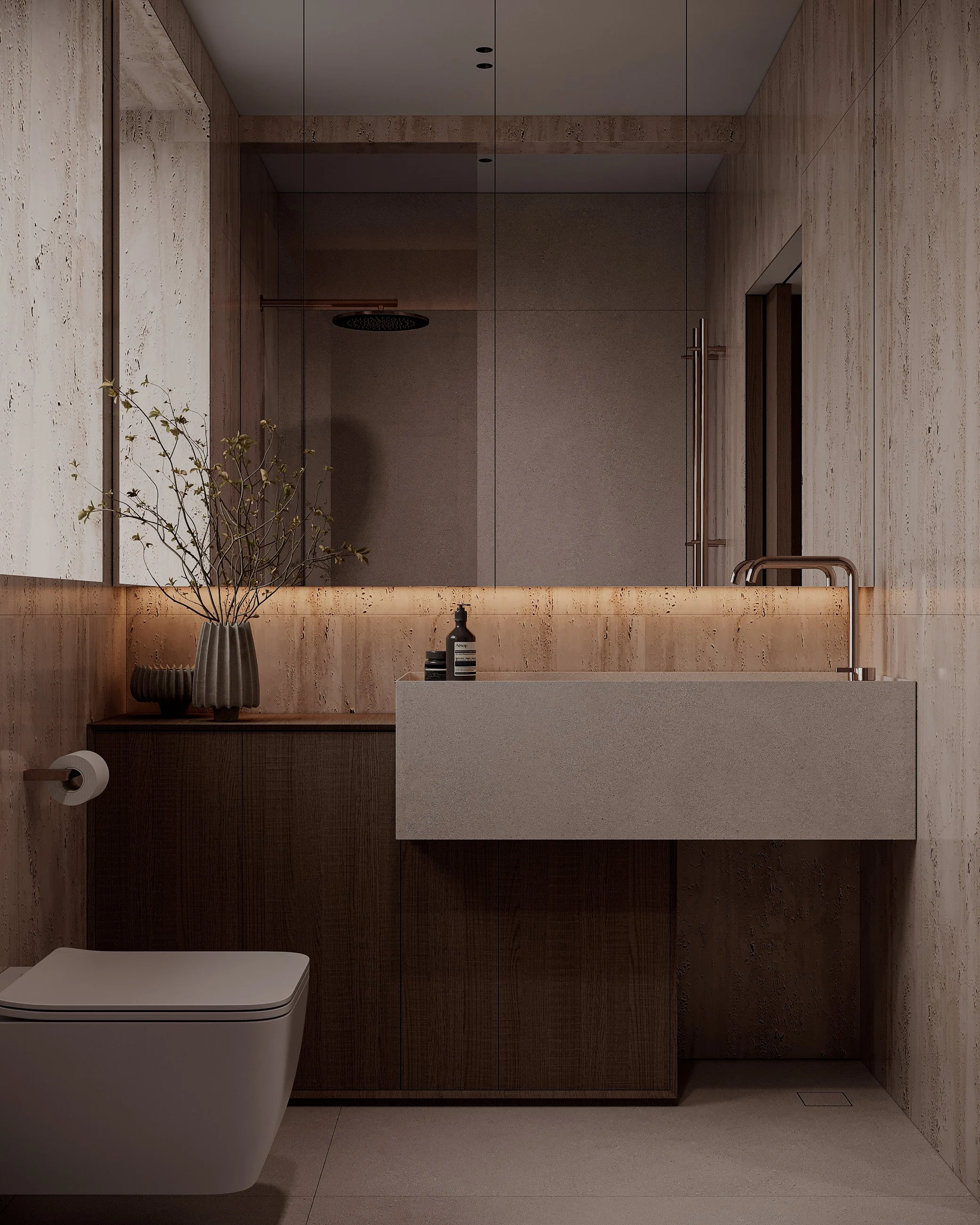
Airiness and verticality became the guiding principles of the interior. Throughout the design, tall vertical elements were introduced to emphasize the height of the ceilings and enhance the perception of space. Instead of traditional curtains, concealed roller blinds were used, maintaining clean lines and reinforcing the light, unobstructed character of the interior.
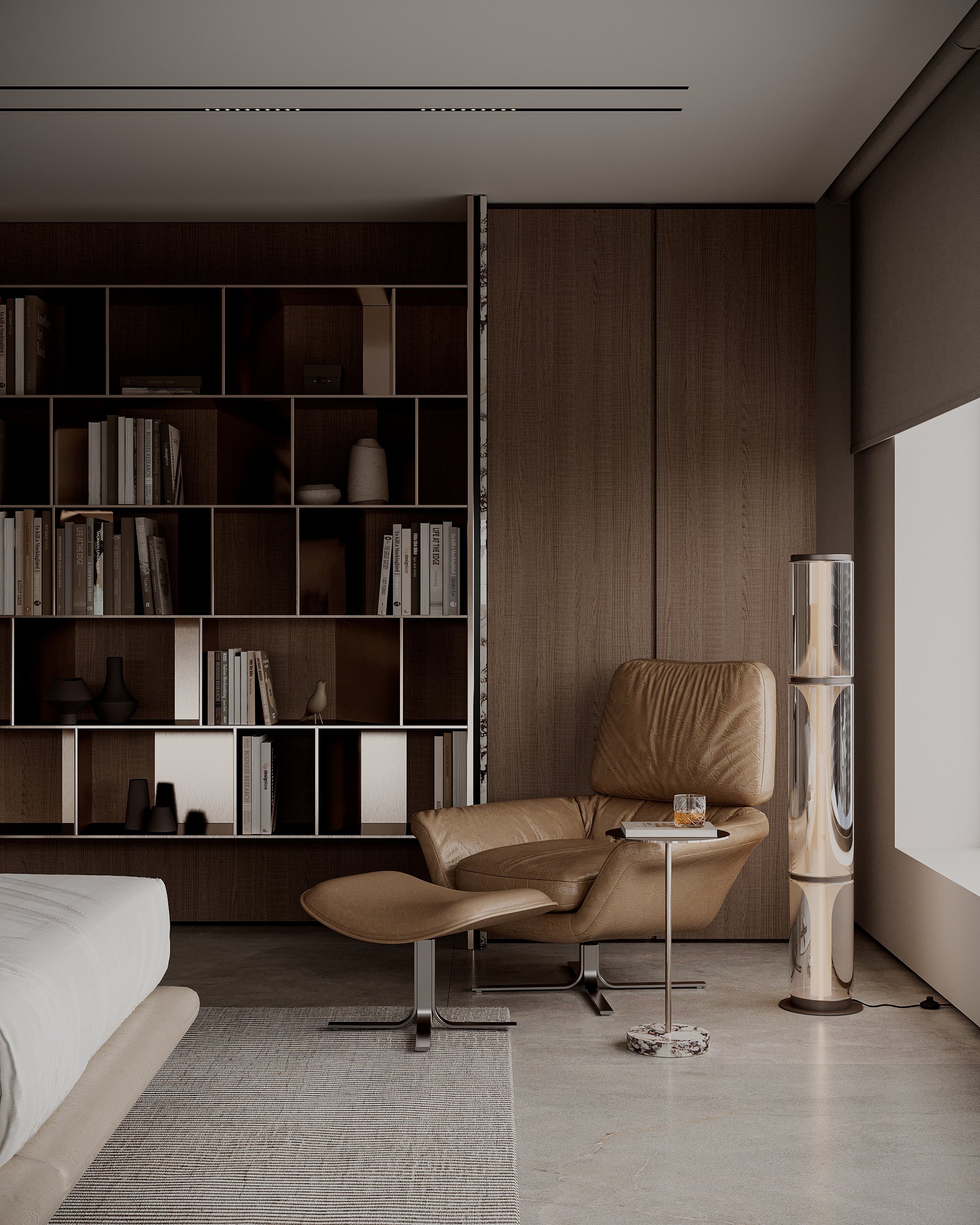
One of the key requests was a guest bedroom that could easily transform into a home office if the property were to be sold in the future. The room was therefore designed as a flexible space that can shift between the two functions with minimal intervention. By simply replacing the bed with a desk and sofas, the room can operate as a fully functional office without relocating electrical outlets or adding built-in furniture such as shelving or a library. All infrastructure and proportions were planned in advance to support both scenarios equally.
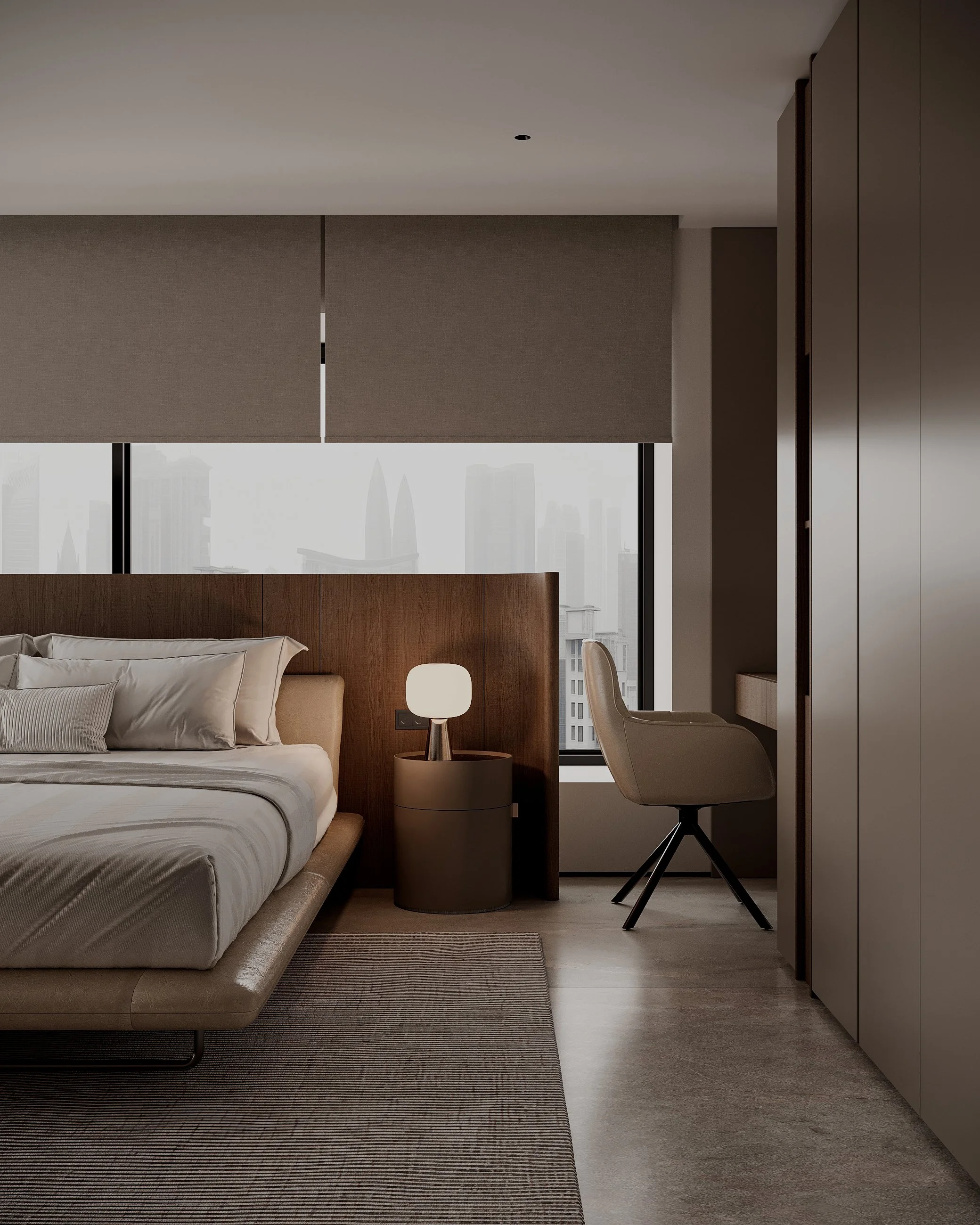
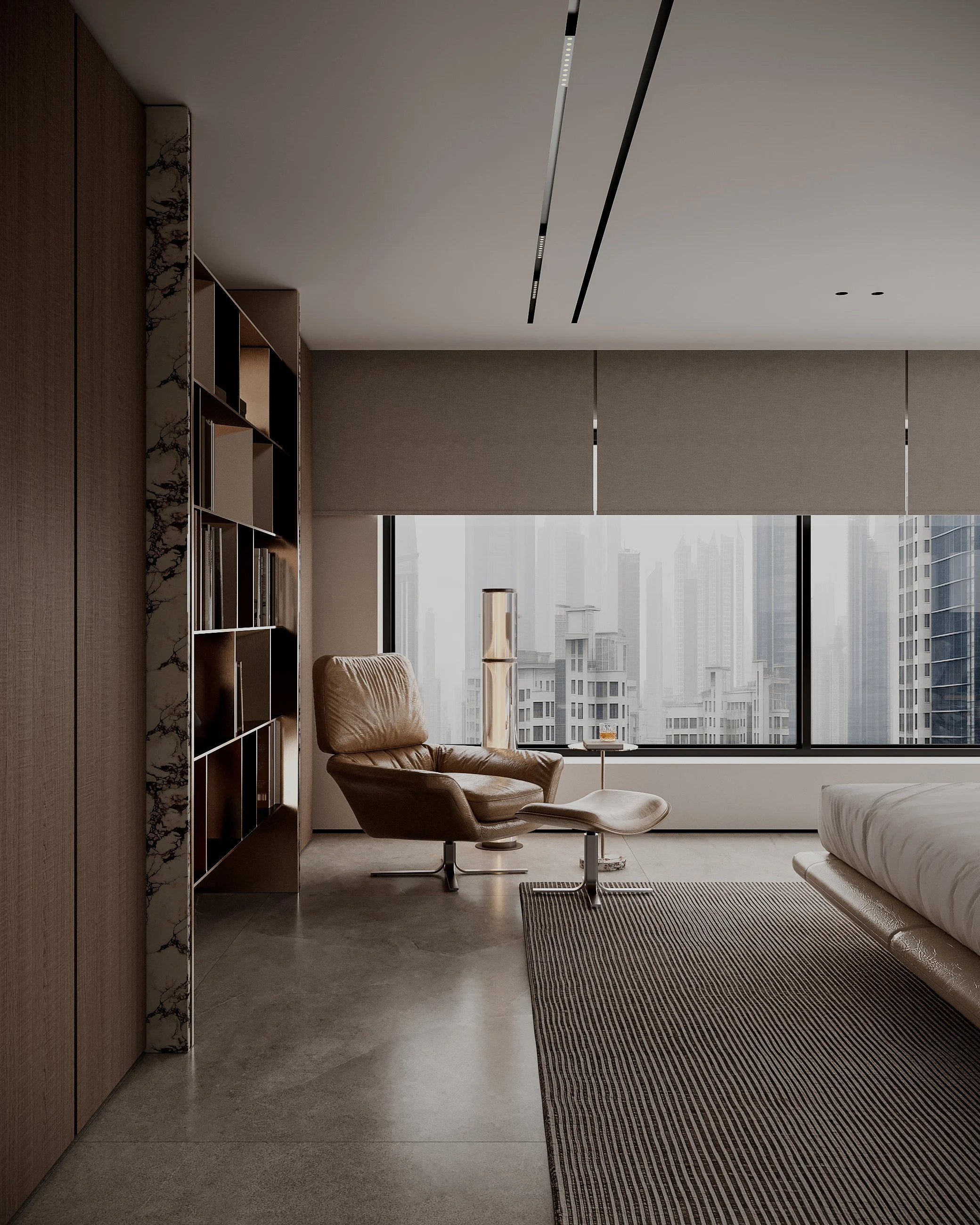
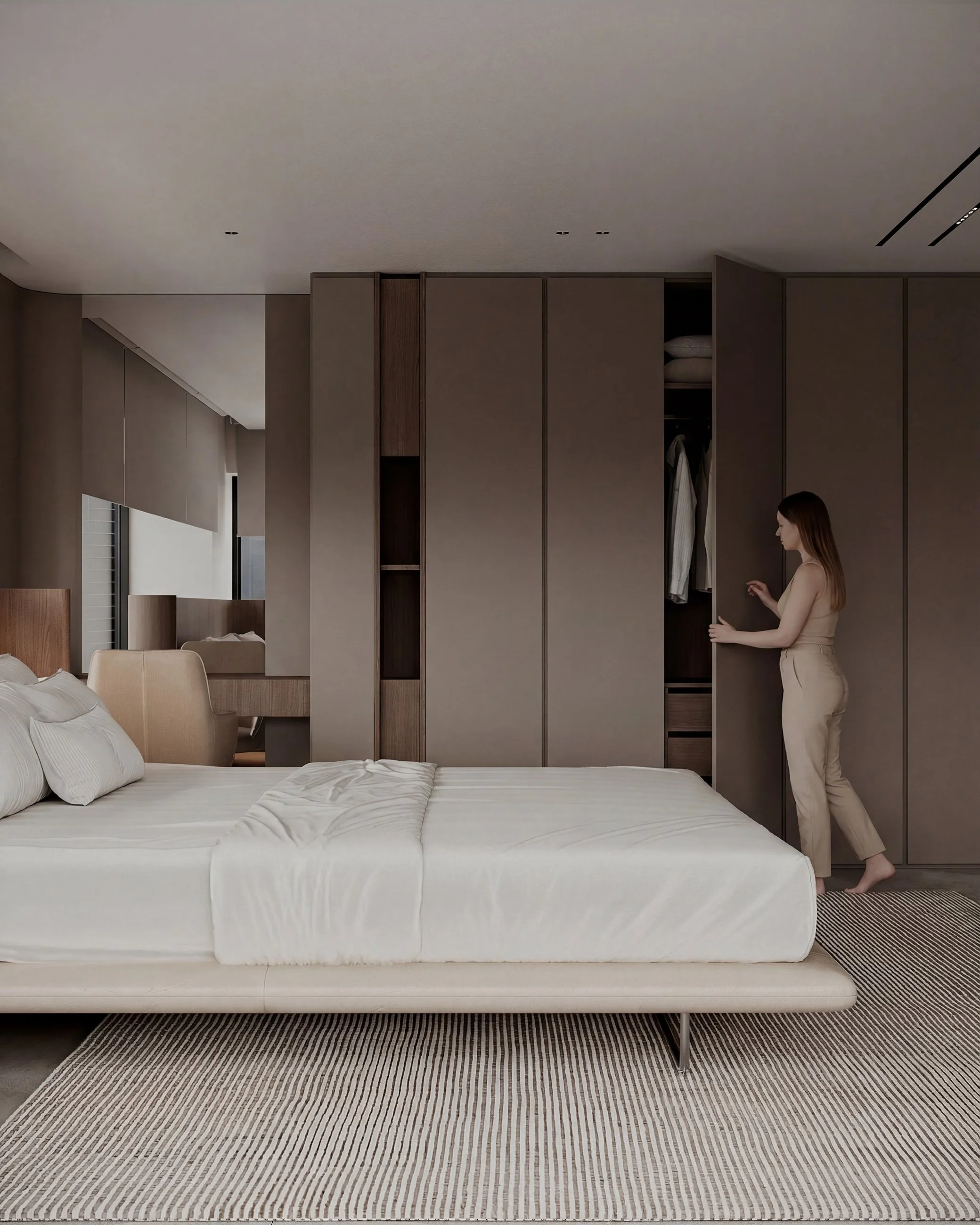
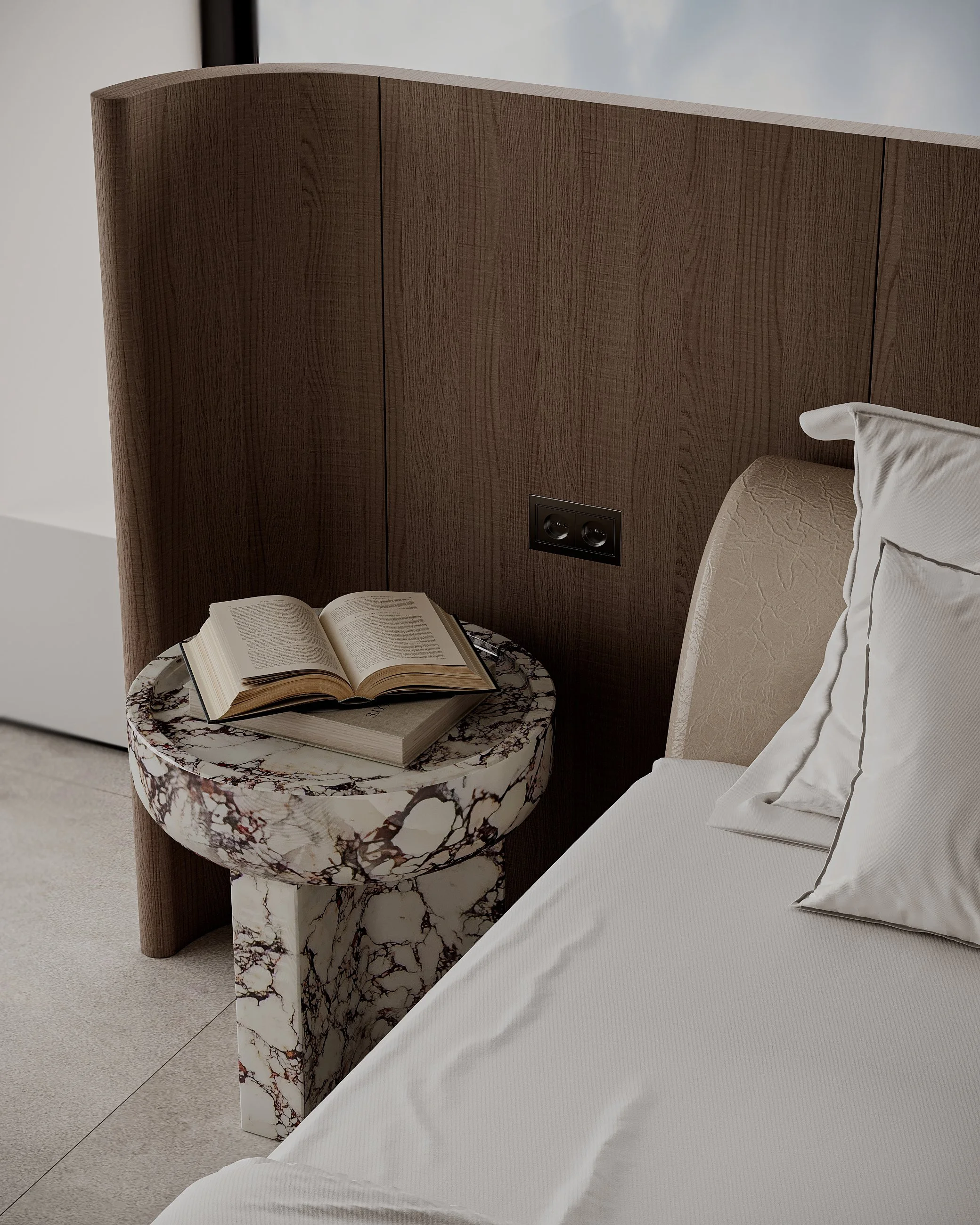
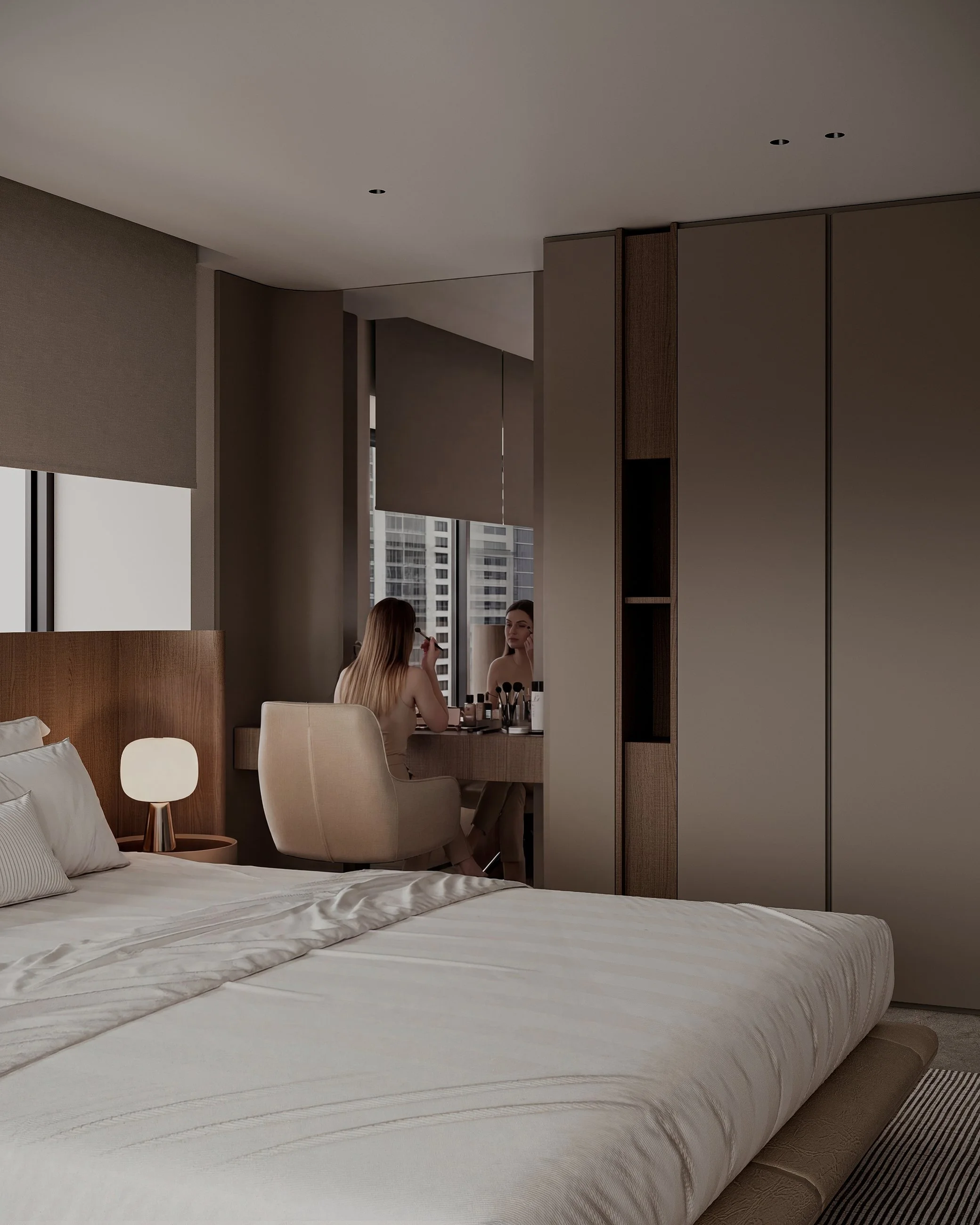
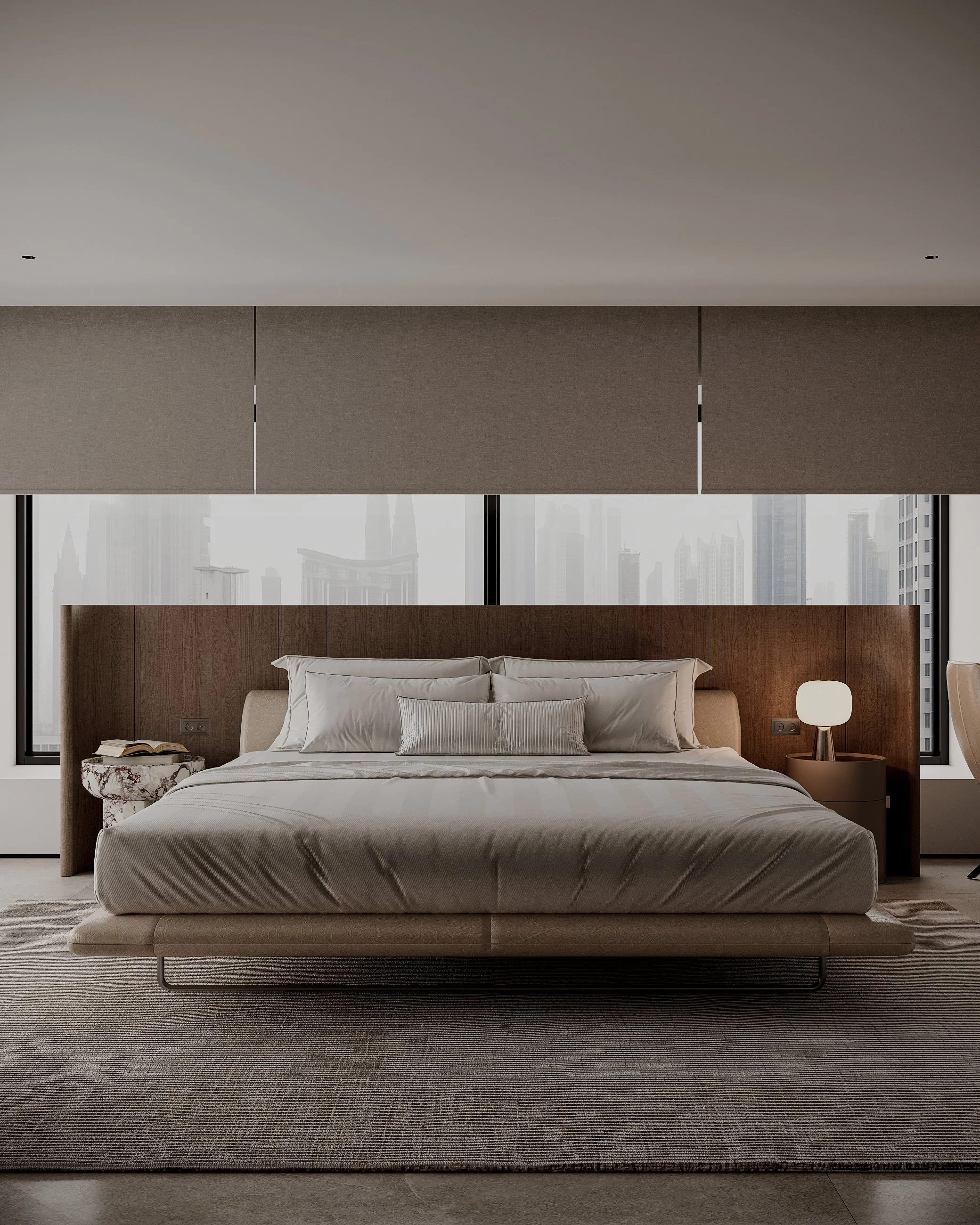
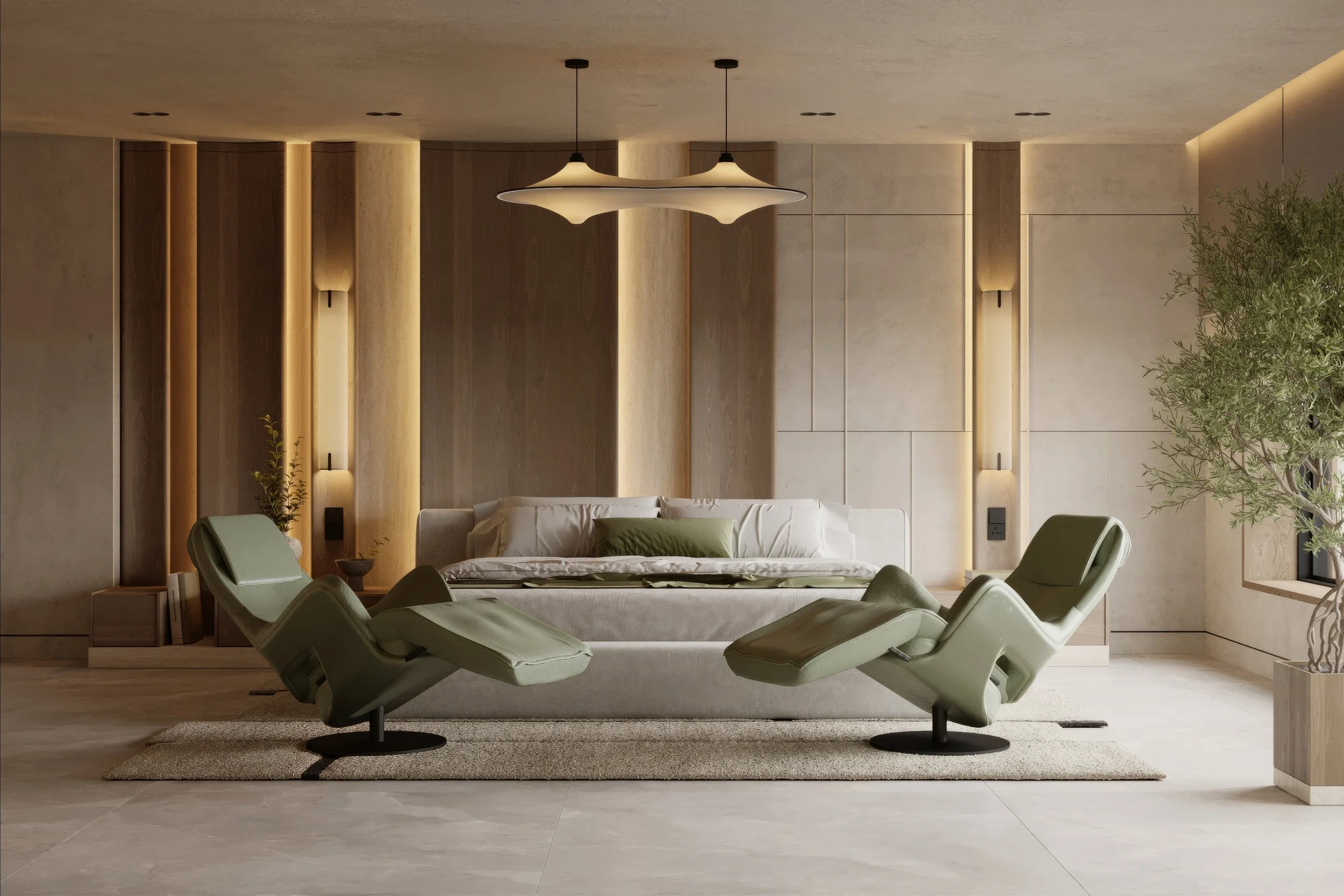
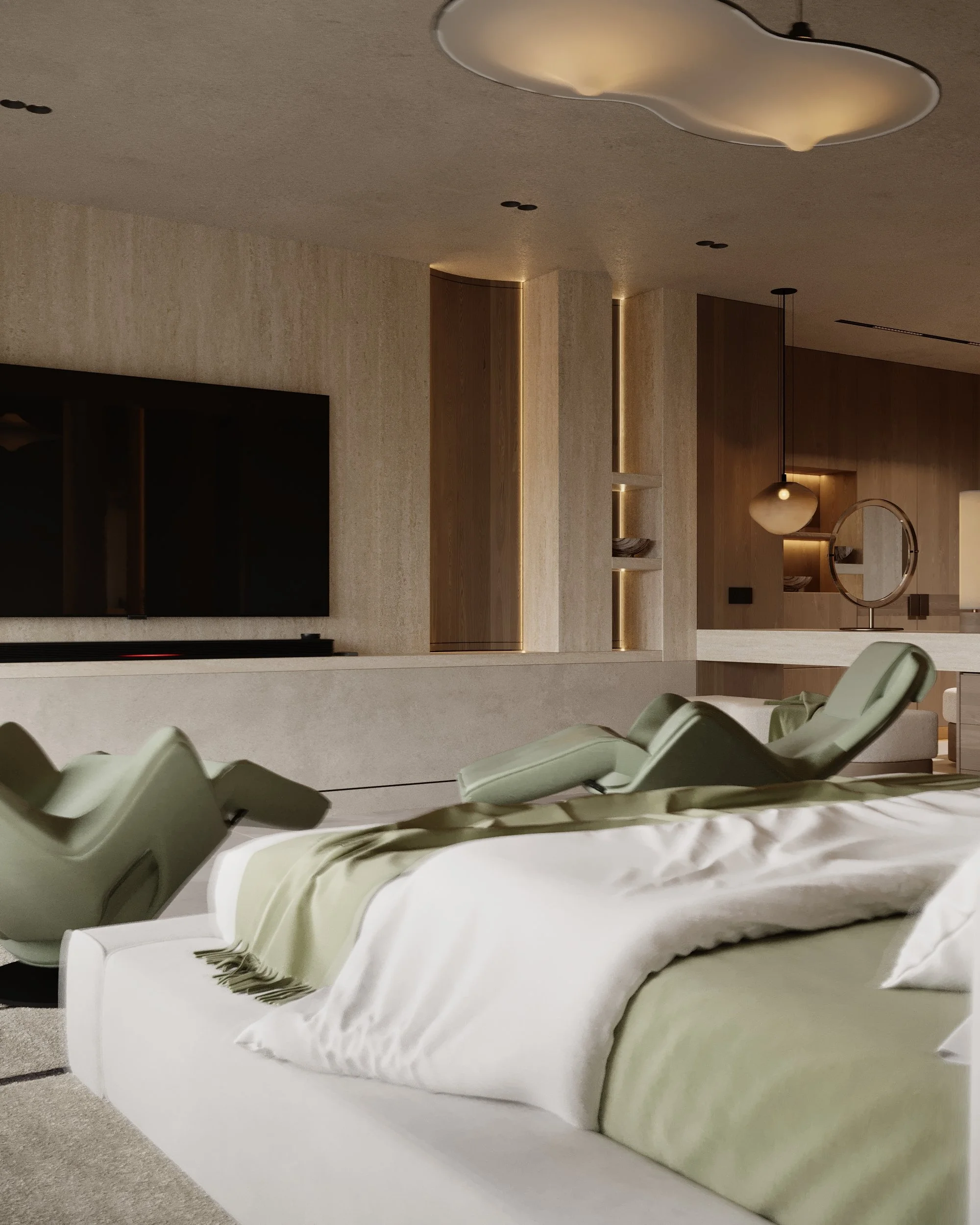
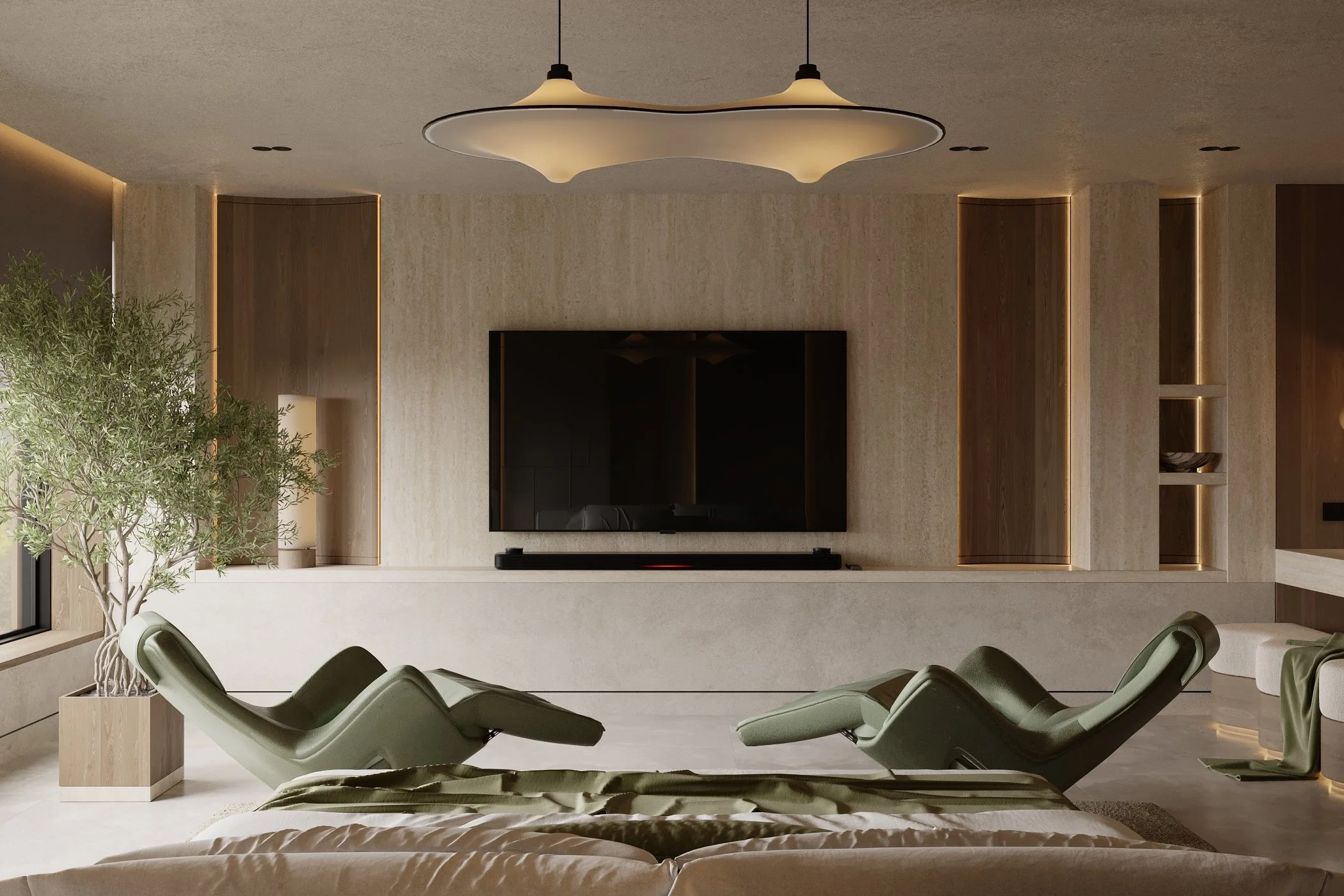
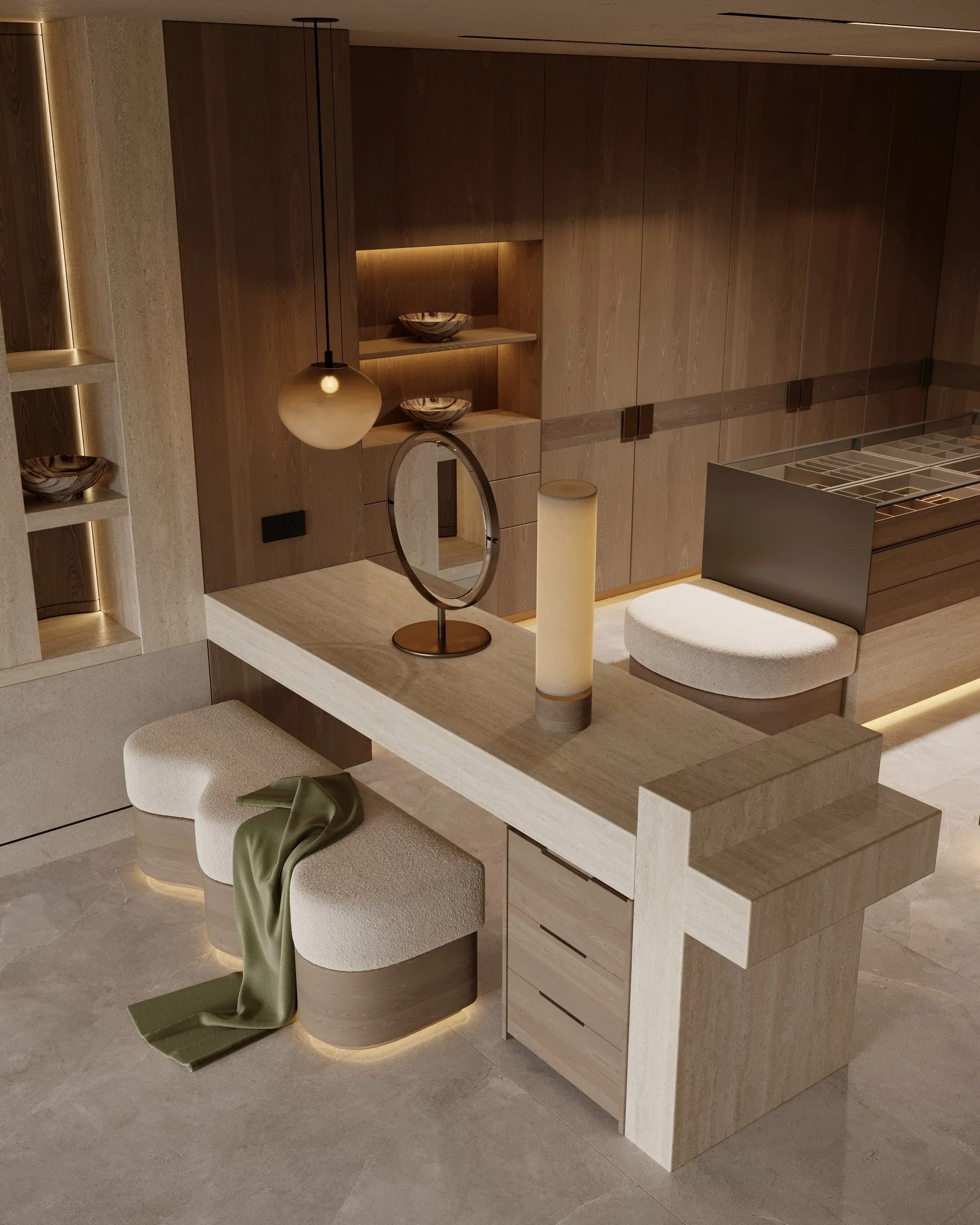
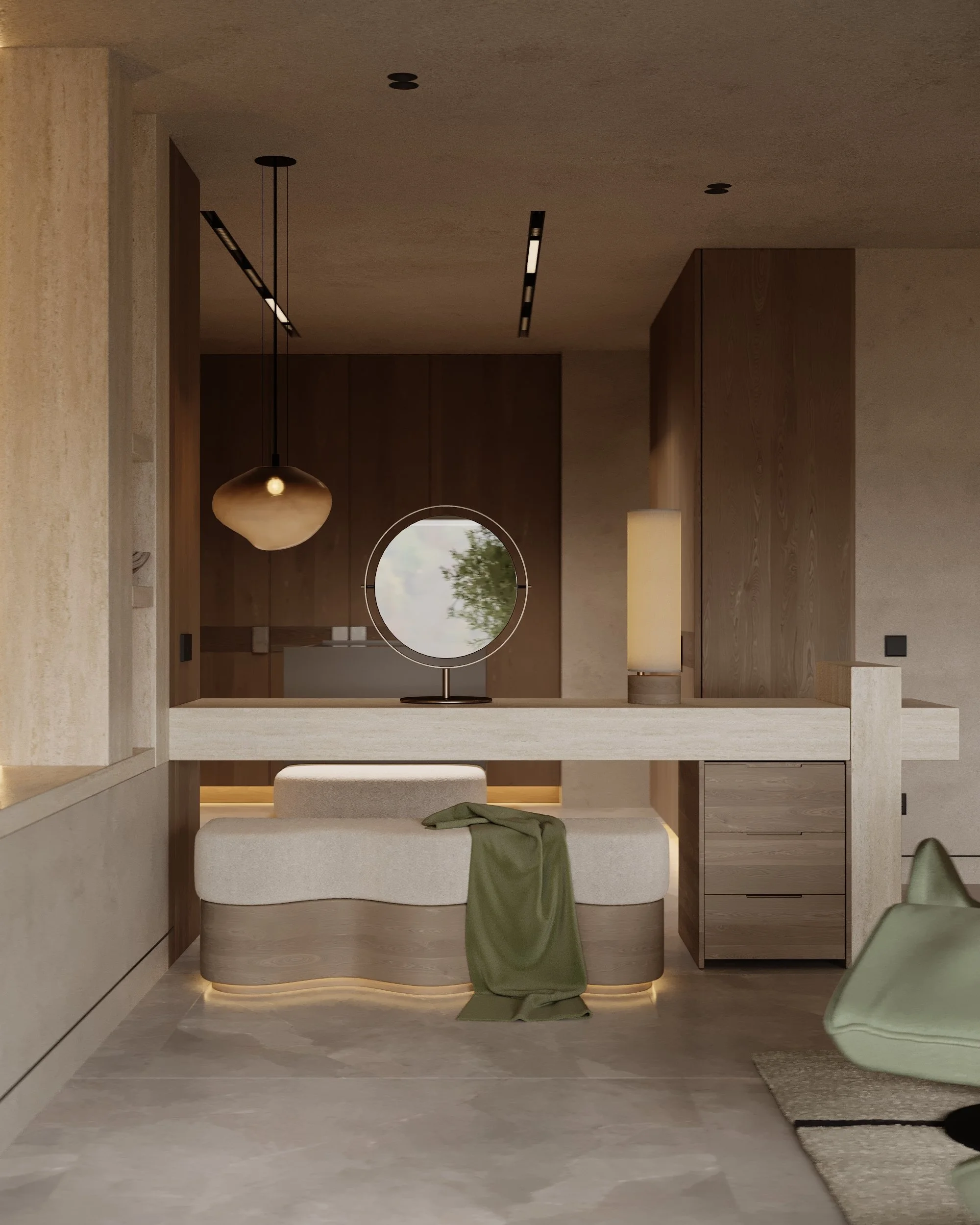
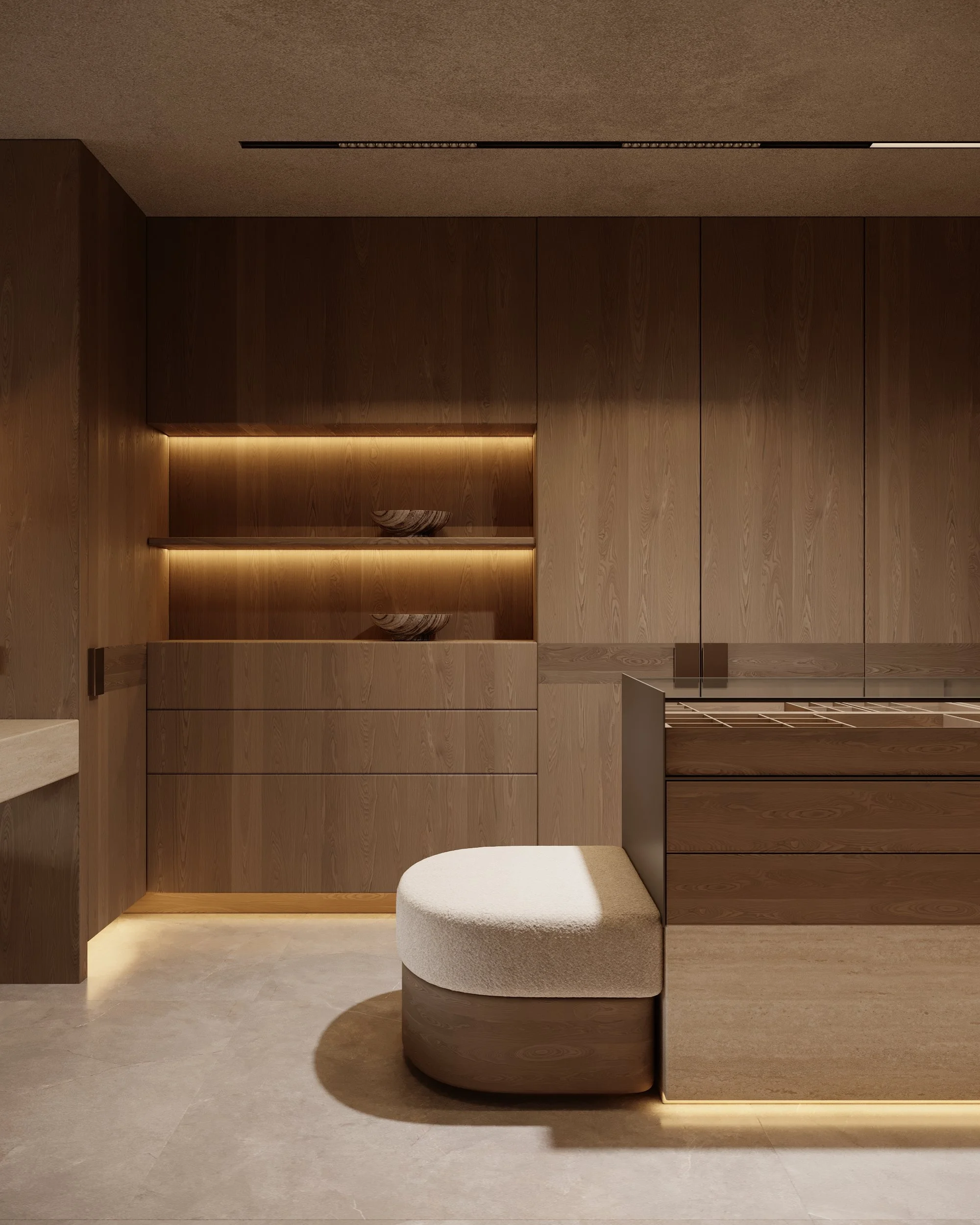
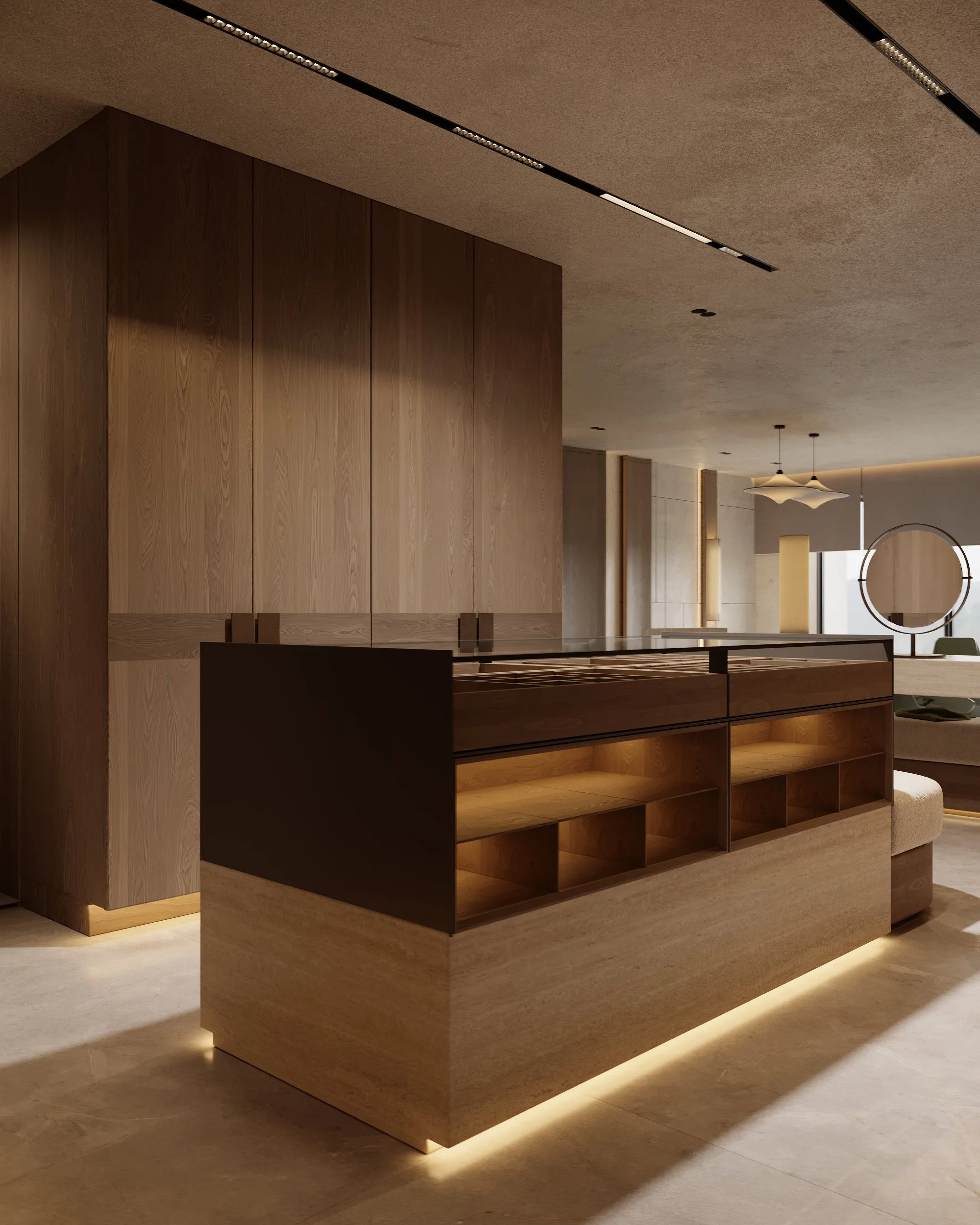
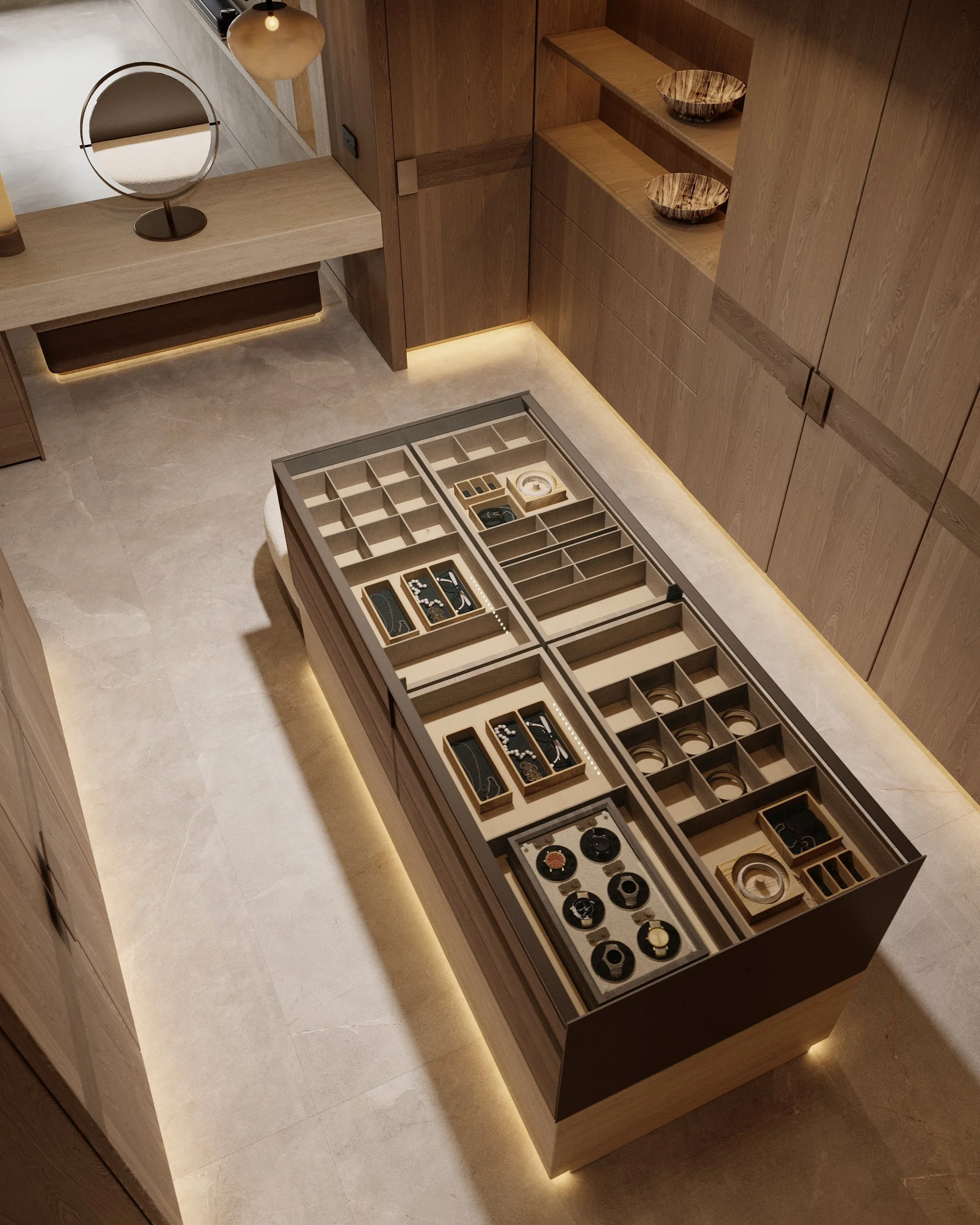
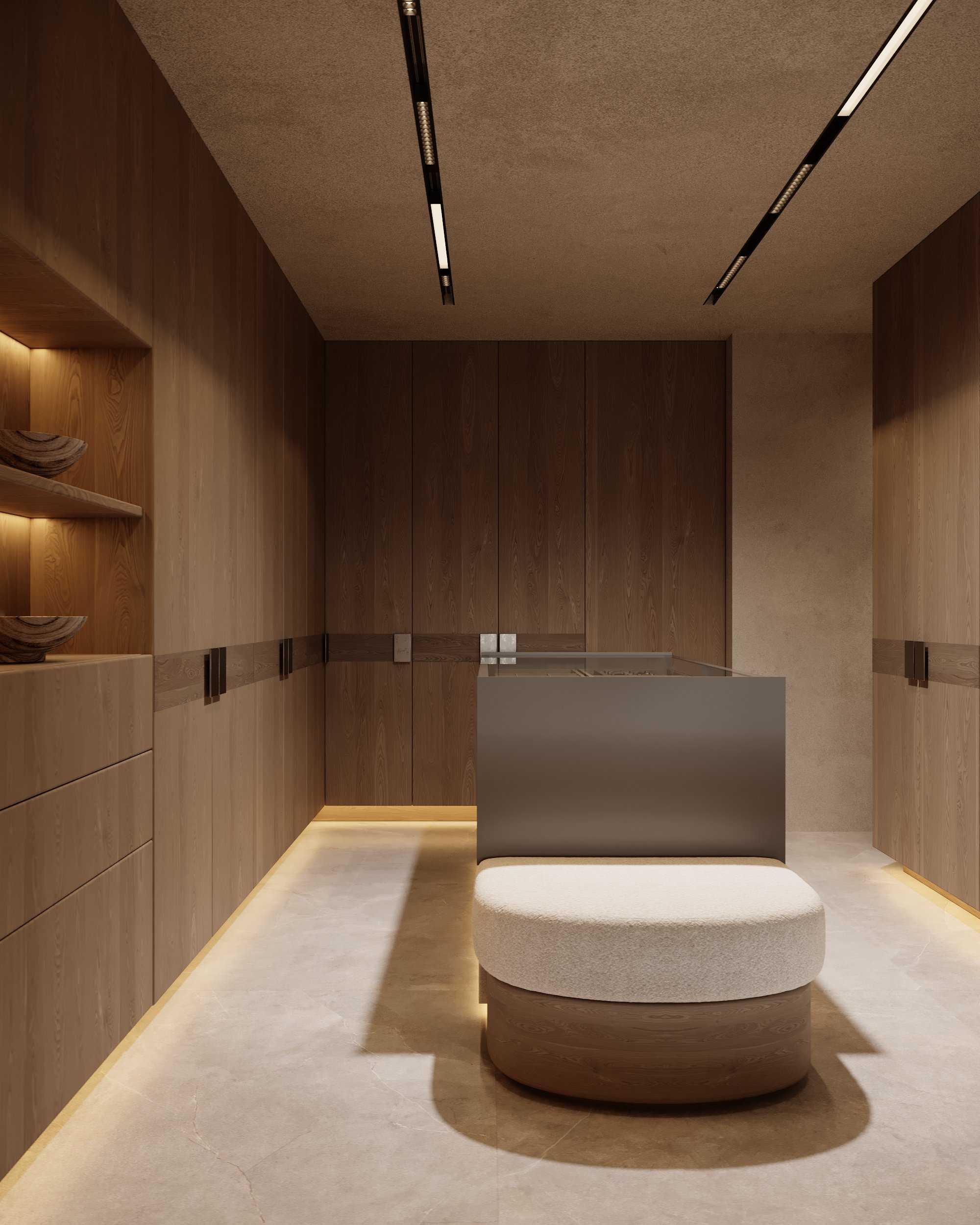
Another priority for the client was an exceptionally spacious master suite combined with a large walk-in wardrobe. To preserve a sense of openness and avoid visually blocking the space with partitions, the walk-in closet was designed as a continuation of the master bedroom rather than a separate enclosed room. This approach allows the two zones to flow naturally into one another, creating a generous and cohesive master block.